Jesse Owens Captures First Gold Medal at 1936 Berlin Olympics
A Deseret News archives piece recalls that on August 3, 1936, American athlete Jesse Owens won his first of four gold medals at the Berlin Olympics in the 100-meter sprint, contributing to the crushing of Hitler's myth of Aryan supremacy.
 Salt Lake City, UT, August 3, 2026 —
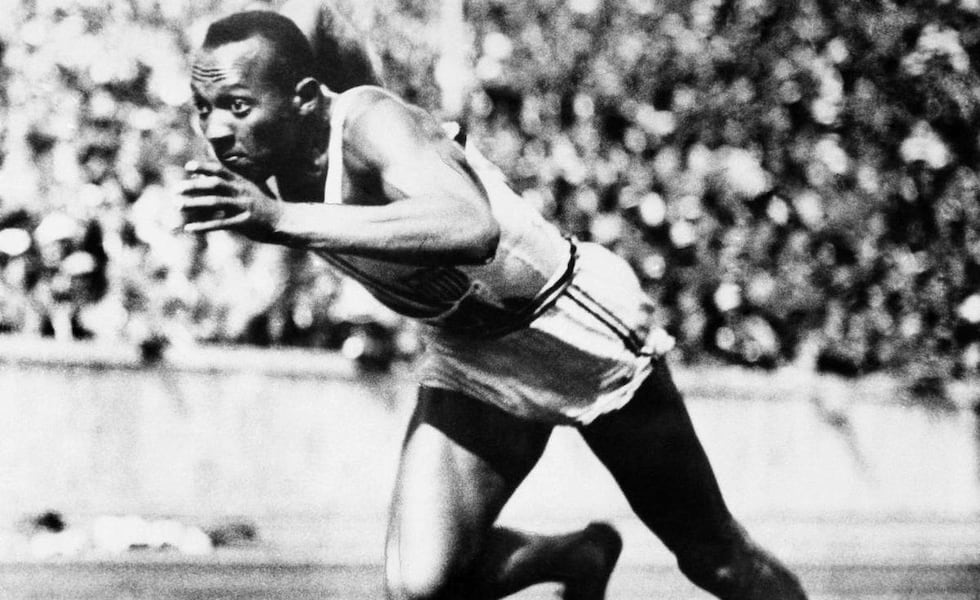
On August 3, 1936, American track and field star Jesse Owens achieved a significant victory at the Olympic Games in Berlin, Germany, securing his first of four gold medals. Owens won the 100-meter sprint, an event that underscored his athletic prowess on the international stage.
Owens’ triumph in the 100-meter race was a pivotal moment in the 1936 Olympics. His performance is widely recognized for challenging and effectively undermining Adolf Hitler’s propaganda surrounding the concept of Aryan racial superiority. By excelling in multiple events, Owens, an African American athlete, demonstrated athletic achievement that transcended racial ideology promoted by the Nazi regime.
The 1936 Berlin Olympics marked a period of intense political and social tension. Owens went on to win additional gold medals in the 200-meter sprint, the long jump, and as part of the 4×100-meter relay team, accumulating a total of four gold medals during the Games. His remarkable performance made him one of the most successful athletes of the XIX Olympiad.
The Deseret News archives highlight this historical event, emphasizing Owens’ impact not only as an athlete but also as a figure who challenged prevailing racist doctrines on a global platform. His victories served as a powerful counter-narrative to the exclusionary ideologies being promoted at the time.
Story summarized from the original created by Chris Miller on www.deseret.com, see more information here.
Media gallery