Salt Lake City Faces Record Heat Amid Broader Utah Warming Trend
Salt Lake City has experienced record-breaking high temperatures this summer, prompting questions about whether Utah summers are getting hotter. Data analysis indicates that while extreme heat has occurred historically, summers in Salt Lake City and Utah have generally been warming,…
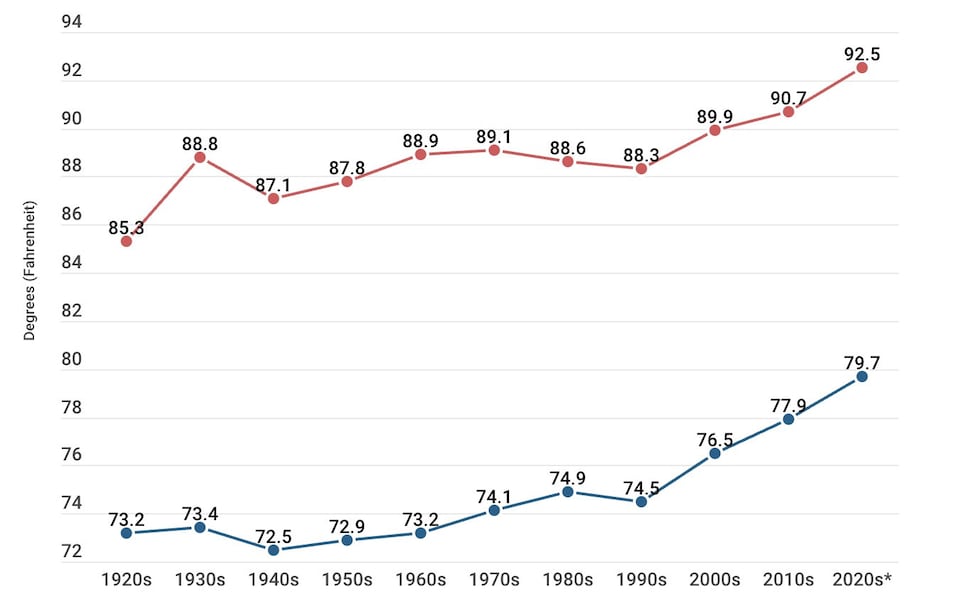
 Salt Lake City, UT, July 30, 2026 — Salt Lake City has been grappling with unprecedented high temperatures this summer, fueling concerns and discussions about a potential increase in the intensity of Utah summers. Analysis of historical weather data suggests that while periods of extreme heat are not new to the region, there has been a discernible warming trend in summers across Salt Lake City and the broader state of Utah, particularly since the year 2000.
Several environmental factors are believed to be contributing to this observed warming. One significant element is the earlier melting of snowpack. As snow melts sooner in the spring, it leaves the ground exposed for longer periods, allowing it to heat up more significantly throughout the summer months. This leads to drier soil conditions, which are less effective at retaining moisture and regulating temperatures.
The urban heat island effect is also cited as a contributing factor. This phenomenon occurs when urban areas experience higher temperatures than surrounding rural areas due to human activities and infrastructure. Buildings, roads, and other surfaces in cities absorb and retain more heat, radiating it back into the environment, thus exacerbating high temperatures within the metropolitan area.
Looking ahead, projections indicate that this trend of increasing summer temperatures in the region is likely to continue. The combination of earlier snowmelt, drier soils, and the persistent urban heat island effect suggests that residents of Salt Lake City and other parts of Utah may need to prepare for warmer summers in the future.
Story summarized from the original created by Carter Williams on www.deseret.com, see more information here.
Media gallery