
Inaugural International Forum on Inner Cultivation and Global Responsibility Held in Silicon Valley
Inaugural International Forum on Inner Cultivation and Global Responsibility Explores Spiritual Renewal and Technology
Press Release Disclaimer: This is a press release distributed through the XPR Media network. It has not been independently verified by our newsroom.
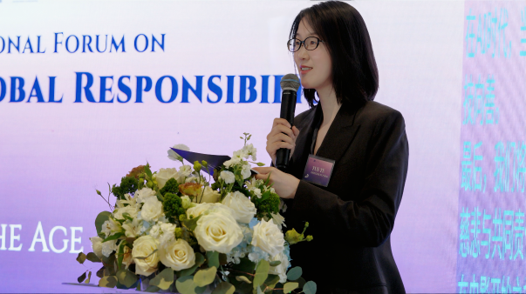

Inaugural International Forum on Inner Cultivation and Global Responsibility Explores Spiritual Renewal and Technology for Good in the AI Age
SILICON VALLEY, CA, UNITED STATES, August 25, 2026 /EINPresswire.com/ — The Inaugural International Forum on Inner Cultivation and Global Responsibility, hosted by the Creative Team of the Documentary KŪKAI and co-organized by Star Alliance Culture Inc., was held at The Quad Conference Center in Silicon Valley. Under the theme “The Kūkai Spirit in the Age of AI,” the forum took place in conjunction with the global premiere of the feature-length documentary KŪKAI. More than 100 participants from the fields of culture, arts, technology, business, venture capital, law, education, and related disciplines gathered to discuss questions surrounding human values, inner cultivation, and the responsible development and use of artificial intelligence.
The forum was moderated by Yan Ge, International Partner at King & Wood Mallesons. In her welcome remarks, Yue Ye, Director of KŪKAI, said the forum was founded to encourage reflection on how people can guide increasingly powerful technologies and how inner cultivation can inform decisions about technological development.
Yue Ye described the Kūkai Spirit through the principles of “purity of heart, compassion for all beings, selfless devotion to others, and boundless vows and practice.” She said she hopes the forum can develop into an international platform bringing together wisdom traditions, scientific exploration, and responsible leadership. According to Yue Ye, the forum is intended to support dialogue across civilizations, disciplines, and countries on wisdom, compassion, inner stability, technology for the common good, social responsibility, and the enduring value of human experience in the Age of AI.
The first sub-theme of the forum was “The Kūkai Spirit and the Reaffirmation of Human Value in the Age of AI.” Dr. Qiang Li, a Silicon Valley venture capitalist, and Derrick Morgan, a Scottish conductor, delivered keynote addresses. Facheng Zhang, a representative cast member of KŪKAI; Shanglong Li, Chairman of IFA and a Silicon Valley investor; and Dr. Fei Wang, a biopharmaceutical entrepreneur, participated in the roundtable discussion.
In his keynote address, Dr. Qiang Li discussed the relationship between AI and people’s beliefs and inner lives. He argued that a central question in the Age of AI is what purposes humanity should pursue with increasingly powerful technologies. He said that while technology can make the mind more capable, people also need to cultivate compassion and a broader sense of responsibility.
Derrick Morgan shared his experience conducting Symphony Kūkai, the musical score for the documentary KŪKAI. He described the process as a personal encounter with themes of compassion, warmth, and spiritual transformation associated with Kūkai. Morgan said that although AI can generate images, music, and other forms of content, it cannot reproduce the human experience created through relationships and particular moments.
During the roundtable discussion, Facheng Zhang said AI is a tool created through human consciousness and argued that it cannot replace many dimensions of human experience. He said that responding to the challenges created by AI requires deeper reflection on compassion, service to others, inner cultivation, creativity, and the responsible use of technology. He also said that countries and organizations share responsibility for supporting the development of the human spirit.
Shanglong Li observed that AI relies on data to provide assistance, while Kūkai’s actions, as he described them, were not based on an expectation of personal return. He said AI can be useful for automating repetitive work, reducing production and communication costs, and helping people understand complex subjects, but argued that technology cannot replace the purpose and meaning behind human actions and communication.
Dr. Fei Wang said AI, as a technological tool, can have both positive and negative effects. He emphasized the importance of using AI responsibly and with the goal of benefiting people and contributing to the common good.
The second sub-theme of the forum was “The Kūkai Spirit and Technology for the Common Good in the Age of AI.” Huican Zhu, founder of Google Image Search, and Jianqiang Huo, a former member of the Parliament of New Zealand and a lawyer, delivered keynote addresses. Stephen Little, Head of the Chinese, Korean and South and Southeast Asian Department of LACMA; Yongde Yue, an industrial AI entrepreneur and Producer of Symphony Kūkai; and scholar Yu Zhu participated in the roundtable discussion.
In his keynote address, Huican Zhu discussed how human creativity can be combined with AI capabilities while reducing the risk of harm. He advocated incorporating principles such as compassion, selflessness, human-centeredness, and service to others into AI research and development.
Jianqiang Huo said AI technology itself is neither inherently good nor evil and argued that responsibility rests with the people who create and use it. He said questions about AI governance should include consideration of the kind of individuals and societies the technology is intended to serve. In his view, law, policy, industry standards, and voluntary compliance should be accompanied by human judgment, compassion, and responsibility.
During the roundtable discussion, Stephen Little discussed Kūkai’s use of artistic works, including painting and calligraphy, and expressed interest in the potential use of AI to help authenticate works of art.
Yongde Yue discussed the relationship between spiritual practice and action, describing the Kūkai Spirit as an example of translating wisdom and compassion into efforts intended to benefit others. He suggested that the values of the people developing AI can influence how the technology is used and expressed hope that reflection on the Kūkai Spirit would encourage compassion and service to others.
Yu Zhu shared how Kūkai’s life and ideas had influenced her own reflection. She contrasted artificial intelligence, which she described as generating knowledge from data and experience, with the wisdom she associates with an enlightened human being.
In her closing remarks, Yue Ye thanked the participants for their remarks and exchanges. She said she hopes the forum will continue to bring together people interested in inner growth, social responsibility, and questions about the future of technology and society, while supporting dialogue across cultures and disciplines.
Yue Ye also expressed hope that future editions of the forum would expand the community involved in these discussions and allow the dialogue to continue in greater depth.
Before the discussions and presentations began, forum participants attended a screening of the nearly 100-minute documentary KŪKAI, which recounts Kūkai’s life and spiritual journey, including his pursuit of spiritual practice, journey to Tang China in search of knowledge, return to Japan, and later work. Two members of the film’s creative team, Huanchang and Nan Feng, also shared reflections on their participation in the production.
Following the forum, guests participated in an outdoor lighting ceremony intended by the organizers to symbolize the transmission of the Kūkai Spirit, followed by networking and social activities.
In her closing remarks, Yue Ye thanked the participants for their remarks and exchanges. She said she hopes the forum will continue to bring together people interested in inner growth, social responsibility, and questions about the future of technology and society, while supporting dialogue across cultures and disciplines.
Yue Ye also expressed hope that future editions of the forum would expand the community involved in these discussions and allow the dialogue to continue in greater depth.
Before the discussions and presentations began, forum participants attended a screening of the nearly 100-minute documentary KŪKAI, which recounts Kūkai’s life and spiritual journey, including his pursuit of spiritual practice, journey to Tang China in search of knowledge, return to Japan, and later work. Two members of the film’s creative team, Huanchang and Nan Feng, also shared reflections on their participation in the production.
Following the forum, guests participated in an outdoor lighting ceremony intended by the organizers to symbolize the transmission of the Kūkai Spirit, followed by networking and social activities.
The forum brought together participants from multiple disciplines for discussions on human values, inner cultivation, AI development, and social responsibility. Sessions addressed how ideas associated with the Kūkai Spirit might inform discussions about human-centered technology and the common good as AI continues to expand into new areas of use.
Following the forum, the creative team of KŪKAI plans to hold eight additional screenings and dialogue events across California in August 2026. The team also plans to hold the Second International Forum on Inner Cultivation and Global Responsibility in London in January 2027, with continued discussions involving participants from different countries and fields.
Star Alliance Culture Inc. co-organized the forum with involvement from its brand, the Silicon Valley AI Film Festival. Flyer Wei, Chief Director, and Vanessa Lu, Executive Director of the Silicon Valley AI Film Festival, were among the team members supporting coordination and international outreach for the event and the documentary KŪKAI.
BIMC
Boston International Media Consulting, Inc
email us here
Legal Disclaimer:
EIN Presswire provides this news content “as is” without warranty of any kind. We do not accept any responsibility or liability
for the accuracy, content, images, videos, licenses, completeness, legality, or reliability of the information contained in this
article. If you have any complaints or copyright issues related to this article, kindly contact the author above.

Media gallery

