Veera Mahajan’s Raising Children Without Losing Each Other Offers Parents a Practical Path to Stronger Relationships and Emotionally Safer Homes
Just another WordPress site
Press Release Disclaimer: This is a press release distributed through the XPR Media network. It has not been independently verified by our newsroom.

Parenting can bring out the best in people, but it can also test even the strongest relationships. Disagreements over discipline, boundaries, homework, bedtime routines, and emotional expression can turn everyday family situations into sources of frustration and conflict. When parents struggle to understand one another, the tension can extend beyond their relationship and shape the emotional environment in which their children grow.
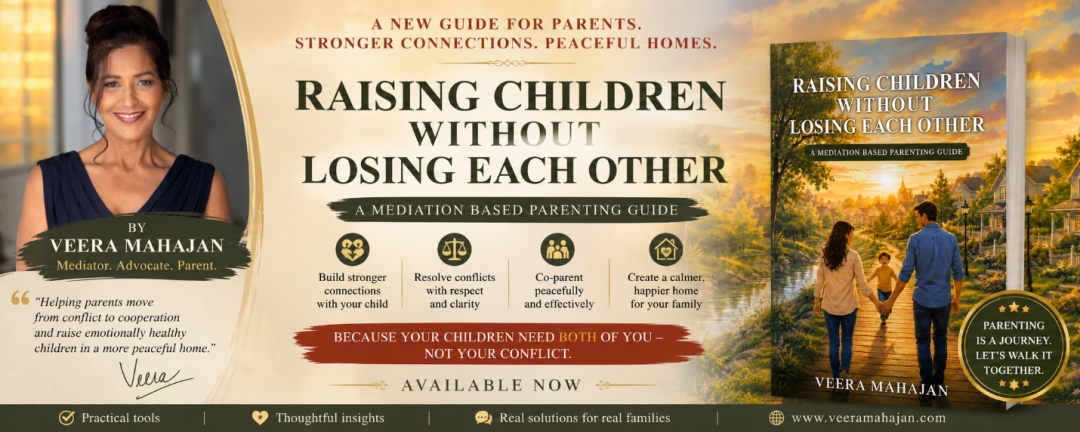
In Raising Children Without Losing Each Other: A Mediation-Based Parenting Guide, author Veera Mahajan explores how parents can navigate these challenges with greater understanding, communicate through differences, and build a family environment grounded in respect, connection, and emotional safety.
Rather than expecting couples to agree on every parenting decision, Mahajan encourages them to recognize what lies beneath their disagreements. A parent who insists on strict discipline may be trying to prevent future problems, while a parent who responds more gently may be concerned about protecting a child’s emotional well-being. Although their approaches differ, both may be motivated by love. The challenge is learning how to work through those differences without turning parenting into a competition.
The book’s central message is clear: parents can disagree without becoming opponents, and discipline can establish boundaries without relying on fear.
Understanding What Happens Behind Closed Doors
Through relatable family situations and practical reflections, Mahajan examines the patterns that can develop when parents have different expectations, emotional responses, and approaches to discipline.
Readers encounter familiar challenges, including disagreements over a child’s behavior, one parent feeling undermined by the other, and conversations that escalate because neither partner feels heard. These situations illustrate how quickly a discussion about a child’s actions can become a conflict about respect, control, and support.
The book also explores how childhood experiences influence parenting. Adults may carry forward the discipline they experienced growing up, or they may react strongly against it because they want their own children to have a different experience. Without awareness, these patterns can influence decisions in ways parents may not immediately recognize.
By encouraging readers to examine their emotional triggers, understand their differences in temperament, and reflect on their upbringing, Mahajan offers a starting point for more intentional parenting. The aim is not to assign blame, but to help parents recognize their patterns and make more thoughtful choices about how they respond to their children and one another.
Moving Beyond Power Struggles to Meaningful Connection
One of the book’s most valuable themes is the distinction between fear-based parenting and connection-based parenting.
Fear can lead parents to believe that every mistake requires immediate correction or that strict control is necessary to prevent future problems. Connection-based parenting, by contrast, focuses on teaching children while preserving their dignity and emotional security.
This does not mean abandoning rules, boundaries, or accountability. It means recognizing that children can learn responsibility without being shamed and can receive firm guidance without being frightened.
Mahajan illustrates how small changes in communication can influence the outcome of everyday parenting moments. Replacing criticism with guidance, pausing before reacting, and addressing disagreements privately can help parents remain focused on the issue rather than allowing frustration to take over.
The book also addresses emotional triggers and the pursue-withdraw pattern, in which one partner pushes for an immediate resolution while the other retreats from the conversation. By recognizing these patterns, couples can begin to interrupt cycles of escalation and create more constructive ways to communicate.
These practical ideas are designed to help parents move away from repeatedly asking who is right and toward a more useful question: What response will help us guide our child while preserving trust within our family?
Putting Children’s Emotional Safety First
A child’s experience of family life extends beyond the rules adults establish. Children also notice tone, tension, silence, and the way their parents respond to disagreement. When conflict becomes frequent or unpredictable, some children may try to keep the peace, hide their mistakes, withdraw emotionally, or become more reactive.
Raising Children Without Losing Each Other reminds parents that children should not be placed in the middle of adult disagreements or made to choose sides. It emphasizes the importance of creating an environment where children can express emotions, make mistakes, and receive guidance without feeling responsible for their parents’ relationship.
The book also draws a firm distinction between healthy discipline and harmful behavior. Intimidation, humiliation, threats, and violence are not acceptable forms of parenting. Fear may produce immediate compliance, but it is not the same as respect or emotional security.
Mahajan emphasizes the importance of emotional regulation, accountability, and repair. Parents will not always respond perfectly, but they can learn to recognize when a situation is escalating, pause before causing harm, acknowledge mistakes, and make meaningful efforts to respond differently.
Where conflict becomes abusive or unsafe, protecting the child and affected family members must take priority. Seeking appropriate professional or emergency support is not a failure; safety comes first.
Practical Guidance for Everyday Family Life
Beyond exploring the emotional roots of parenting conflict, Mahajan encourages readers to put their insights into practice. The book includes reflection questions and exercises designed to help parents identify triggers, recognize familiar patterns, discuss their needs without blame, and develop shared approaches to family challenges.
Readers are encouraged to pause before reacting, listen to understand their partner’s concerns, agree on practical responses to recurring situations, and revisit difficult conversations when emotions have settled.
These approaches offer parents a way to begin making changes without expecting every disagreement to disappear overnight. Progress can start with one calmer response, one more honest conversation, or one shared decision about how to handle a recurring challenge.
The broader goal is to help parents build a partnership in which differences can be discussed respectfully, boundaries remain clear, and children are not caught between competing parental expectations.
A Reminder That Parents Are Growing, Too
At its heart, Raising Children Without Losing Each Other is about more than resolving disagreements over discipline. It is about recognizing that parenting challenges can reveal deeper patterns within individuals and relationships, creating opportunities for greater self-awareness and growth.
Mahajan’s approach acknowledges that parents bring different histories, temperaments, fears, and beliefs into family life. They will not always respond to situations in the same way, and they will not always get things right. What matters is their willingness to understand themselves, take responsibility for their behavior, and keep working toward a healthier family environment.
The book offers an encouraging alternative to the pursuit of perfect parenting: a commitment to connection, accountability, emotional safety, and continued learning.
For couples who want to strengthen their parenting partnership, parents who find themselves repeating the same arguments, and families seeking more respectful ways to handle conflict, Mahajan’s guide offers practical ideas for beginning that work.
Ultimately, children do not need parents who agree on every decision. They need parents who can work through differences without making home feel unsafe, who can establish boundaries without intimidation, and who are willing to repair relationships when things go wrong.
With Raising Children Without Losing Each Other, Veera Mahajan invites parents to move beyond the question of who is right and focus on what matters most: raising children in an environment where love is supported by respect, discipline is balanced with connection, and disagreements do not have to come at the cost of family unity.
About the Book
Raising Children Without Losing Each Other: A Mediation-Based Parenting Guide by Veera Mahajan explores the challenges couples face when their parenting styles, emotional responses, and childhood experiences differ. Through relatable family scenarios, practical guidance, and reflection exercises, the book addresses parental conflict, emotional triggers, fear-based discipline, healthy boundaries, emotional regulation, and the importance of creating a safe and respectful home environment.
Media Contact
Company Name: Golden Gate Publishers
Contact Person: Edward Norton
Email: Send Email
Phone: +1-(408)-409-6459
Address:580 California Street, 12th & 16th Floors
City: San Francisco
State: California
Country: United States
Website: https://goldengatepublishers.com/
Press Release Distributed by ABNewswire.com
To view the original version on ABNewswire visit: Veera Mahajan’s Raising Children Without Losing Each Other Offers Parents a Practical Path to Stronger Relationships and Emotionally Safer Homes