Vadzo Imaging Validates Bolt-544CRS 5MP Onsemi HyperLux LP AR0544 Color MIPI CSI-2 Camera on Rockchip RV1126 for Embedded Vision Applications
The Bolt-544CRS is a 5MP low-power MIPI Camera built on the Onsemi HyperLux LP AR0544 sensor, and Vadzo has validated
Press Release Disclaimer: This is a press release distributed through the XPR Media network. It has not been independently verified by our newsroom.


The Bolt-544CRS is a 5MP low-power MIPI Camera built on the Onsemi HyperLux LP AR0544 sensor, and Vadzo has validated it on the Rockchip RV1126 for embedded vision applications. The RV1126 is a favorite for compact smart camera products because it combines an image signal processor, a neural processing unit, and a video encoder in a low-power chip, and the camera attached to it decides how much of that efficiency survives in the finished device. The Bolt-544CRS pairs wake-on-motion with low power consumption, so a device can sleep through quiet hours and wake only when something moves. Line interleaved HDR (LI-HDR) and enhanced dynamic range (eDR) modes handle scenes that mix bright and dark regions, and auto exposure and auto white balance keep the image consistent. As a 5MP Wake-on-Motion MIPI Camera, a Low Power Embedded MIPI Camera, and an RV1126 5MP Camera, it connects through standard MIPI CSI-2. Designed for automation and robotics, smart security, retail automation, telematics, and kiosk devices, it gives low-power designs a color image with 5MP of detail.
FORT WORTH, TX / ACCESS Newswire / October 19, 2026 / Vadzo Imaging, a provider of embedded vision camera products for OEMs and system integrators, today announces validation of the Bolt-544CRS 5MP Low Power MIPI Camera on the Rockchip RV1126, a color camera built on the Onsemi HyperLux LP AR0544 sensor. Part of Vadzo’s MIPI camera portfolio, the Bolt-544CRS combines wake-on-motion, low power consumption, LI-HDR and eDR modes, auto exposure, and auto white balance behind a MIPI CSI-2 interface. With this validation, Vadzo delivers an AR0544 LI-HDR MIPI CSI-2 Camera for automation and robotics, smart security, retail automation, telematics, and kiosk devices, together with guidance on how the wake path and duty cycle of a device decide how much power a camera really saves.
Technical Problem Definition: Why a Low Power Embedded MIPI Camera Must Be Designed Around the Wake Path
Low power imaging is not a single number. It is a pattern of states. A battery-powered door camera spends nearly all of its time waiting. A kiosk may sit idle through the night and see a hundred users by day. A vehicle camera watches a parked car for hours between events. A shelf camera in a retail store sees a burst of activity at opening and a long lull afterward. The camera and the processor behind it must move between waiting and working many times a day, and the cost of each transition adds to the cost of the states themselves. A device that wakes too often can spend more energy on transitions than it saves while waiting.
The processor makes the picture more complicated. A low-power SoC such as the RV1126 can suspend most of its cores and wake them when needed, but waking takes time and energy, and the camera has to tell the processor that something happened. If the camera cannot watch the scene on its own while the processor sleeps, the processor must stay partly awake to watch for motion, which gives away much of the benefit. A camera that supports wake on motion handles that watching in its own low-power state and wakes the system only when the scene changes. The saving is largest in devices where long quiet periods are the normal case.
Lighting makes the first moments after a wake hard. The device wakes into whatever the scene is doing, whether that is a bright doorway, a dim aisle, or a sunlit windshield. Exposure and white balance have not yet adapted, and if the dynamic range of the scene exceeds what one exposure records, the first frame may clip or fill with noise. A wake event that captures a poor first frame wastes the energy spent to produce it. Designers therefore need dynamic range modes that suit the scene and the power budget, along with exposure and white balance that settle quickly. These behaviors decide whether a wake produces evidence or merely a blurred, clipped frame.
Teams that choose a camera on a low power claim alone often discover that the claim described a condition they never use, such as a resolution they do not run or a host that never sleeps. The cost of correcting that mistake after hardware is built includes new boards, new thermal designs, and a delayed launch. A short measurement campaign at the start of a project is far cheaper than a retrofit later.
Engineering Explanation: AR0544 Low Power Consumption MIPI Camera Behavior on Rockchip RV1126
The Bolt-544CRS is built on the Onsemi HyperLux LP AR0544, a 5MP (2592 x 1944) color rolling shutter sensor with a 1/4.2 inch optical format and 1.4 micron pixels. The HyperLux LP family is designed for low-power operation, and the sensor supports wake-on-motion, low power consumption in active and standby states, and HDR operation in more than one form. The AR0544 Low Power Consumption MIPI Camera behavior was validated with the module connected to the Rockchip RV1126 through its MIPI CSI-2 interface, so integrators can start with a combination that has already been checked. That reduces the number of unknowns a small team must resolve before a pilot.
The RV1126 is a vision processor built for compact, low-power devices, with an integrated ISP, a neural processing unit, and a hardware video encoder. That makes it a natural partner for a camera that supports wake on motion. The camera can watch the scene while most of the processor idles, and the system can bring up the encoder and inference only after a trigger. How the camera signals the host depends on the design of the carrier board, and Vadzo documents the wake path so teams can plan for it. Teams should measure the time from the scene change to the first usable frame on their own hardware, because the processor’s own resume time is part of that figure. Operating system settings and driver load order can also change the result noticeably.
The module offers two dynamic range modes. Line interleaved HDR (LI-HDR) captures two exposures on alternating lines of the same frame, so bright and dark regions are recorded together and moving subjects show fewer artifacts than with methods that combine separate frames, at some cost in effective vertical detail. The enhanced dynamic range (eDR) mode extends the usable range with simpler processing, which suits scenes with moderate contrast and devices that count their power. Auto exposure and auto white balance operate in both modes, so brightness and color settle without host-side tuning. Vadzo recommends comparing the modes on real scenes and noting the effect on power. Devices that see repeating light patterns can store a preferred mode for each time of day.
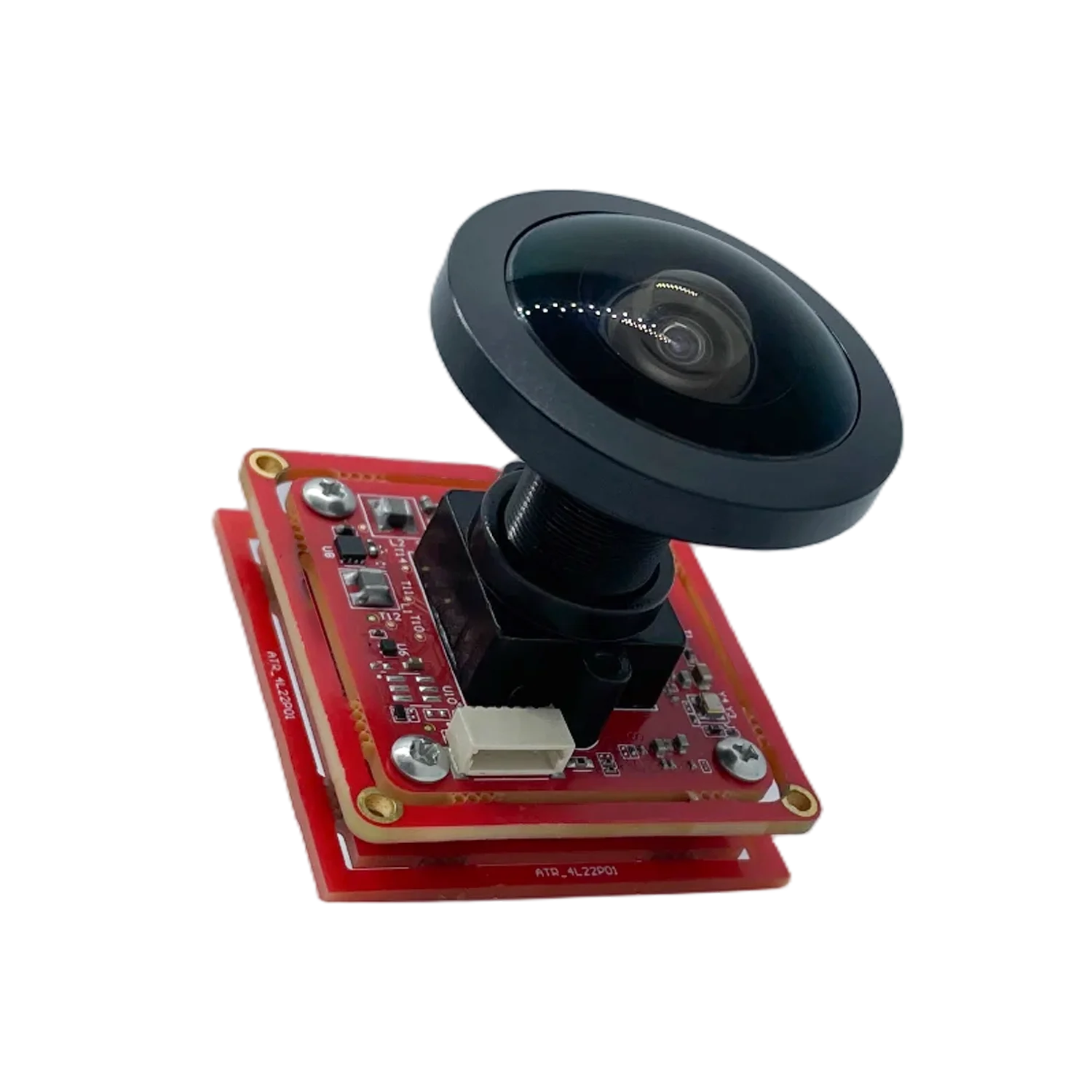
The module is a compact MIPI CSI-2 camera with an S-Mount (M12) lens holder and fixed focus optics. It supports full 5MP capture as well as lower resolution modes, and the standard interface allows connection to other Linux-based boards for evaluation. Because power depends on the whole device, Vadzo encourages teams to record current in each state- standby, wake, and streaming- with the real host and the real illumination, and to treat the camera as one part of a chain. A device budget built from measured states is far more reliable than one built from a single headline figure.
Product Overview
The Bolt-544CRS is a 5MP Low Power MIPI Camera built on the Onsemi HyperLux LP AR0544 sensor and validated on the Rockchip RV1126. As a 5MP LI-HDR MIPI Camera, it records scenes with strong contrast in one frame, and as a 5MP Wake-on-Motion MIPI Camera, it can watch a scene at low power and wake the system when something moves. The 5MP eDR MIPI Camera designation covers the enhanced dynamic range mode, and the AR0544 RV1126 MIPI CSI-2 Camera designation confirms the validated connection to the Rockchip processor. The module combines the sensor, image processing, and a MIPI CSI-2 interface with an S-Mount lens holder and fixed-focus optics. It also serves as an AR0544 5MP MIPI CSI-2 Camera, a MIPI CSI-2 Camera for RV1126, and a Low Power Embedded MIPI Camera for designs that need a compact color module.
Key Capabilities of the Onsemi HyperLux LP AR0544 Low Power MIPI CSI-2 Camera for RV1126
Key specs: 5MP (2592 x 1944) Max Resolution | Onsemi HyperLux LP AR0544 1/4.2 inch Sensor Format | 1.4 micron Pixel | Color with Rolling Shutter | MIPI CSI-2 Interface | S-Mount (M12) Fixed Focus Optics
5MP Wake-on-Motion MIPI Camera Wake Path on RV1126
Wake on motion lets the camera watch the scene at low power and wake the system when something moves. On an RV1126 design, that means the processor can idle while the camera keeps watch, and the encoder and inference start only after a trigger. Teams can tune the motion sensitivity to avoid false wakes from shadows, foliage, or lighting changes, since each false wake costs the energy of a full resume. Vadzo recommends measuring the time from the scene change to the first usable frame on the target board, because both the camera and the processor contribute to it. Teams can repeat the measurement after each software update to catch regressions early.
Low Power Consumption Across Active and Standby States
The camera is designed for low power consumption in both active and standby states, and Vadzo encourages teams to measure each state separately on their own hardware. A device that streams for a short part of the day and waits for the rest depends mostly on its standby draw, while an always-on device depends on its streaming draw. Thinking in terms of duty cycle shows which figure matters for a given product. Illumination, the host, and any radios add to the total, so the camera figures should be placed inside a full device budget. Duty cycle, meaning the share of time spent in each state, turns those figures into a daily energy estimate.
5MP LI-HDR MIPI Camera Line Interleaved HDR Mode
Line interleaved HDR combines two exposures captured on alternating lines of the same frame, so the bright and dark parts of a scene are recorded in one pass. As a 5MP LI-HDR MIPI Camera, the module suits doorways, vehicle windshields, and storefronts where contrast is high. Because both exposures are captured together, moving subjects show fewer artifacts than with sequential methods, although effective vertical detail can be reduced. Teams should evaluate the mode on a real scene and record its effect on power. A sample recording from the doorway, windshield, or storefront in question is more persuasive than any specification.
5MP eDR MIPI Camera Enhanced Dynamic Range Mode
Not every scene needs the full effort of multi-exposure HDR. The enhanced dynamic range (eDR) mode extends the usable range of the image with simpler processing, which suits scenes with moderate contrast and devices that watch their power. As a 5MP eDR MIPI Camera, the module lets designers use eDR for everyday scenes and keep LI-HDR for harsh ones. Devices can also switch between modes during the day, for example choosing LI-HDR in strong sun and eDR in soft light. The switch can follow a schedule or the measured brightness of the scene.
Auto Exposure and Auto White Balance in the On-Board ISP
The on-board image signal processor handles the functions that keep an image consistent, including auto exposure and auto white balance. After a long idle period, the scene may look very different from the last time the camera was active, and these automatic controls bring brightness and color back to a sensible state quickly. For retail, kiosk, and telematics devices, consistent color also supports recognition and review. Manual control remains available for teams that want to fix a setting. Fixed settings suit controlled lighting, and automatic settings suit sites where light changes.
MIPI CSI-2 Camera for RV1126 Integration and 5MP Color MIPI Camera Manufacturer Support
The Bolt-544CRS connects through a standard MIPI CSI-2 interface and has been validated on the Rockchip RV1126. For OEMs reviewing Vadzo as a 5MP Color MIPI Camera Manufacturer, lens matching, firmware customization, driver support for supported platforms, and enclosure design assistance are available alongside the hardware. Teams can prototype with the evaluation unit and move to production with the same module and documentation, and they can ask Vadzo to review the carrier board design for the wake path before boards are built. The RV1126 5MP Camera platform suits devices that need to balance image quality and power in a compact housing. Evaluation units let teams confirm that balance before they commit to a board design.
“Low power only matters if it survives contact with a real device. A camera can idle at a tiny draw and still waste energy if the processor cannot sleep, or if the first frame after a wake is unusable. The Bolt-544CRS was validated on the RV1126 with that whole chain in mind. It watches the scene on its own; it offers LI-HDR and eDR modes so the first frame is useful, and auto exposure and auto white balance settle quickly. We are careful with claims. Camera power is one part of the device, so we encourage teams to measure each state on their own hardware, and we help them plan the wake path.” – Alwin Vincent, Product Manager, Vadzo Imaging.
Application Specific Sections: Low Power MIPI Camera Systems in Practice
5MP Automation and Robotics MIPI Camera Applications
Autonomous mobile robots and automated equipment spend long periods parked, charging, or waiting for work, and a camera that sleeps until needed reduces the energy cost of those periods. The Bolt-544CRS works as a 5MP Automation and Robotics MIPI Camera that wakes when something enters the scene, with LI-HDR helping at dock doors and bright windows. Because the sensor uses a rolling shutter, teams should check how motion affects the image on moving platforms, and the fixed-focus lens should be matched to the working distance. Robot makers can also pair the module with several lenses for different tasks.
5MP Smart Security MIPI Camera and 5MP Wake-on-Motion Smart Security Camera Applications
Security devices at doors, gates, and perimeters wait most of the time and must record clearly when someone arrives. The module serves as a 5MP Smart Security MIPI Camera that stays in a low-power state until the scene changes, and as a 5MP Wake-on-Motion Smart Security Camera, it records events instead of empty scenes, which also reduces storage and review time. LI-HDR helps at entrances that face the sun, and an RV1126-based design can start its encoder and inference only after the trigger. Night scenes may need supplementary lighting, which belongs in the power budget. Installers can log wake events over several days to tune the threshold before final deployment.
5MP Retail Automation MIPI Camera and eDR Retail Automation Camera Applications
Retail systems multiply every camera across many stores, so small savings add up. The module works as a 5MP Retail Automation MIPI Camera for shelf, queue, and entrance monitoring, and as an eDR Retail Automation Camera, it handles mixed store lighting with less processing than a full HDR mode. Auto white balance keeps product colors consistent across stores. Analytics that involve shoppers raise privacy and consent questions that belong to the solution provider and the retailer. Chains that standardize on one module also simplify spares and training.
AR0544 Telematics MIPI Camera and Low Power Telematics Camera Applications
A vehicle camera that watches a parked vehicle must not drain the vehicle battery, so standby power is the critical figure. The Bolt-544CRS can serve as an AR0544 Telematics MIPI Camera that waits at low power while parked and wakes on motion to record events, and as a Low Power Telematics Camera, it keeps the draw low during driving as well. LI-HDR helps with bright sky and dark tunnels, and auto exposure follows the changes quickly. Fleet teams should validate thermal behavior and mounting for their vehicles, and they remain responsible for any safety-related claims. Parking mode recording also needs a battery cutoff in the vehicle design.
AR0544 Kiosk MIPI CSI-2 Camera and LI-HDR Kiosk MIPI Camera Applications
Kiosks sit idle for long stretches and then serve a user for a short session. The module works as an AR0544 Kiosk MIPI CSI-2 Camera that waits at low power and wakes when a person approaches, which can also start the attract screen or the user session. As a LI-HDR Kiosk MIPI Camera, it keeps faces and documents readable when the kiosk faces a bright entrance. Lower idle power also reduces heat inside sealed enclosures, which supports reliability across large fleets. Operators can also use the wake event to start the session without a separate presence sensor.
Frequently Asked Questions About Low Power MIPI Camera Systems
Q: What makes a MIPI camera suitable for a low-power RV1126 design?
A: Vadzo Imaging looks for three things. The camera should have a real low-power state; it should be able to watch the scene and wake the processor only when something moves; and it should deliver a usable first frame after the wake. A MIPI CSI-2 Camera for the RV1126 with those traits lets the processor sleep most of the time, which is the goal of any low-power embedded MIPI Camera design. Vadzo Imaging also recommends measuring standby, wake, and streaming current on the actual board, because the processor and the lighting contribute to the total, so the camera figures alone never tell the whole story. An RV1126 5MP Camera with a documented wake path makes the rest of the budget easier to predict.
Q: How can a parked vehicle camera record events without draining the vehicle battery?
A: The camera needs a very low standby draw and a way to wake the system only when the scene changes. A Low Power Telematics Camera with wake-on-motion watches the scene on its own while the rest of the device waits, then starts recording after a trigger. Vadzo Imaging suggests validating standby current on the real vehicle, planning a battery cutoff, and tuning the motion sensitivity so shadows and passing traffic do not cause needless wakes.
Q: How should wake on motion sensitivity be set for different environments?
A: Sensitivity is a balance. A threshold that is too high misses slow or distant subjects, and one that is too low wakes the system for shadows, foliage, and lighting changes, which wastes the energy the feature is meant to save. Vadzo Imaging recommends logging wake events for several days in the real location, then adjusting the threshold, and it helps teams do this with a 5MP Wake-on-Motion MIPI Camera before they finalize the settings, which avoids both missed events and needless wakes. A 5MP LI-HDR MIPI Camera and a 5MP eDR MIPI Camera mode can also be compared in the same trial.
Q: Does an on-board ISP replace the processor’s own ISP?
A: It can reduce the need for it. A camera with an on-board ISP applies functions such as auto exposure and auto white balance inside the module, so the host receives an image that is already consistent. Whether the host also uses its own ISP depends on how the system is configured, and Vadzo Imaging documents the options for each platform. Teams that want raw access and full control of tuning can ask Vadzo Imaging about other module options.
Q: Why should OEMs choose Vadzo Imaging as their 5MP Color MIPI Camera Manufacturer?
A: Vadzo Imaging offers more than a camera module built around a capable sensor. OEMs working with Vadzo Imaging receive a module validated on a low-power Rockchip processor, with a choice of dynamic range modes and plain guidance on how to measure power across a full device, along with engineering support for lens selection, firmware customization, and enclosure design. Vadzo Imaging maintains evaluation kits with no minimum order requirement, so teams can measure power on their own hardware before committing to volume production.
Availability
The Bolt-544CRS 5MP Low Power MIPI Camera built on the Onsemi HyperLux LP AR0544 sensor is available now for evaluation and production orders. Evaluation kits include the camera module, a lens, a MIPI CSI-2 cable, and platform documentation, with no minimum order requirement. Engineering teams can measure standby and streaming power, wake behavior, and image quality in each dynamic range mode on their own RV1126 hardware before committing to a production bill of materials, which tells them more than a datasheet comparison alone. Teams that need a particular lens or carrier board configuration can ask Vadzo to review the setup. Browse the full range of MIPI camera options at Vadzo’s website or contact Vadzo at support@vadzoimaging.com to request an evaluation unit or discuss OEM integration requirements for automation and robotics, smart security, retail automation, telematics, and kiosk programs.
About Vadzo Imaging
Vadzo Imaging is a global provider of embedded vision solutions and delivers high-performance camera technologies and imaging platforms for applications in robotics, industrial automation, UAVs, edge AI, and medical systems. Its products are designed for seamless integration with leading embedded platforms including Rockchip, NVIDIA Jetson, Raspberry Pi, and NXP i.MX. Vadzo supports customers through hardware customization, firmware development, and module-level drivers, enabling faster development and deployment of vision-based systems across MIPI, USB, GigE, Wi-Fi, and SerDes camera interfaces.
Media Contact
Alwin Vincent
Vadzo Imaging
Email: alwin@vadzoimaging.com
LinkedIn: Vadzo Imaging
YouTube: Vadzo Imaging
X: Vadzo Imaging
SOURCE: Vadzo Imaging
View the original press release on ACCESS Newswire
Media gallery