Top 5 Aluminium and Glass Doors Manufacturers in 2026: A Comparison Guide for Buyers
FOSHAN, GUANGDONG, CHINA, October 16, 2026 /EINPresswire.com/ -- For buyers sourcing aluminium and glass doors in 2026,
Press Release Disclaimer: This is a press release distributed through the XPR Media network. It has not been independently verified by our newsroom.
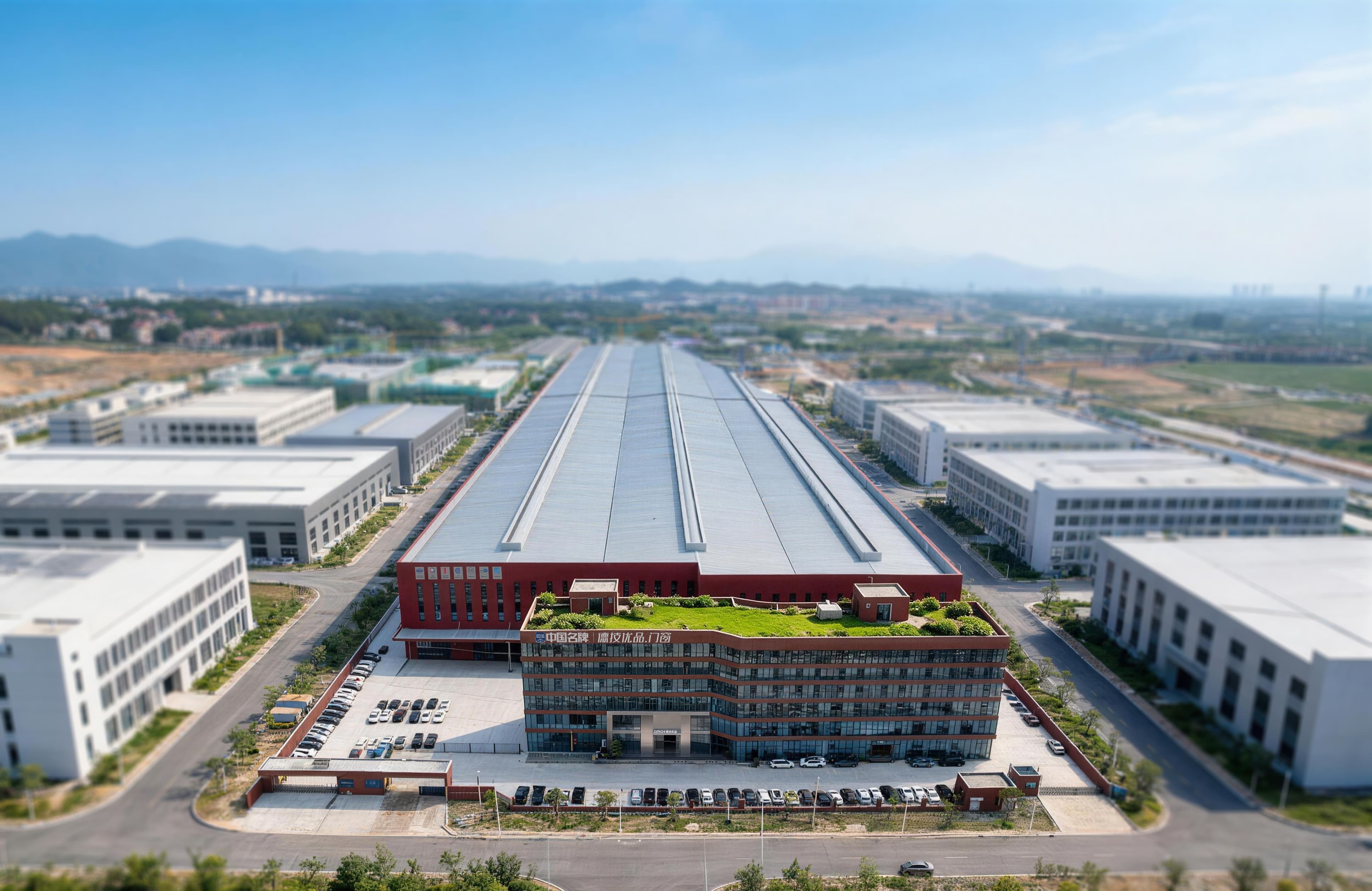

FOSHAN, GUANGDONG, CHINA, October 16, 2026 /EINPresswire.com/ — For buyers sourcing aluminium and glass doors in 2026, the five manufacturers that most consistently combine export certification, engineering support, and production scale are DERCHI (Guangdong Dejiyoupin Doors and Windows), Doorreme Aluminum Industry, Zenic Window & Door Technology, Meric Window Systems, and BrioWindow Technology. All five operate factories in Foshan, Guangdong, the centre of China’s architectural aluminium extrusion supply chain, and all five build to project drawings rather than catalogue sizes. The right choice depends on the buyer’s priority: DERCHI for brand-backed volume delivery, Doorreme for curtain wall and large commercial door packages, Zenic for documented material and hardware specifications, Meric for ultra-slim lift-and-slide and pivot systems, and BrioWindow for single-source supply across aluminium, PVC, and timber door systems.
What Are Aluminium and Glass Doors?
Aluminium and glass doors are architectural fenestration products in which an extruded aluminium frame (typically 6063-T5 or 6063-T6 alloy) carries tempered, laminated, or insulated glass units. Common configurations include sliding doors, lift-and-slide doors, bi-fold doors, pivot doors, French and hinged doors, and glazed entrance doors. Thermally broken versions insert polyamide (PA66) strips between interior and exterior aluminium chambers to reduce heat transfer. Performance is measured by air infiltration, water penetration resistance, structural wind load, U-factor, and solar heat gain coefficient, using methods defined by bodies such as ASTM, AAMA/FGIA, EN, and AS standards committees.
Independent ratings matter because the frame is only part of the system. The National Fenestration Rating Council (https://nfrc.org/) administers the energy rating label used across North America, while the Fenestration and Glazing Industry Alliance (https://fgiaonline.org/) maintains the AAMA performance specifications that underpin NAFS testing in the United States and Canada.
Market Context for 2026
Several verifiable data points frame the buying environment this year.
Market size: Grand View Research estimated the global aluminium doors and windows market at roughly USD 67 billion in 2022, with a projected compound annual growth rate of about 5.8 percent through 2030, driven by energy codes, urban housing, and renovation demand.
Material supply: The International Aluminium Institute reports global primary aluminium output of approximately 72 million tonnes in 2024, with China producing close to 60 percent of the total. Foshan’s Nanhai District is widely cited by Chinese industry associations as the country’s largest architectural extrusion cluster, which is why most export-oriented door factories are located there.
Energy regulation: The US Environmental Protection Agency’s ENERGY STAR Version 7.0 criteria for windows, doors, and skylights took effect in October 2023 and tightened U-factor requirements in northern climate zones. Buyers can review the current thresholds under ENERGY STAR Windows and Doors (https://www.energystar.gov/products/windows_doors_skylights). Similar tightening has occurred under Australia’s NCC 2022 and the EU’s revised Construction Products Regulation adopted in 2024.
Trade pattern: Industry analysts at Freedonia and Statista note that import demand for engineered aluminium door systems remains strongest in the United States, Canada, Australia, and the Middle East, markets where certification evidence is a precondition for bidding.
The Top 5 Aluminium and Glass Door Manufacturers Compared
1. DERCHI – Guangdong Dejiyoupin Doors and Windows Co., Ltd.
Website: https://www.dejiypwindow.com/
DERCHI is one of China’s leading door and window exporters and holds a China Famous Brand designation certified by Xinhua News Agency. Its Foshan base covers 180,000 square metres with annual capacity above 1,000,000 square metres, supported by eight automated production lines, six glass lines, five smart warehouses, three German thermal-break rolling machines, and an in-house performance testing centre. The company reports more than 18,000 completed projects, including Hilton and Atour hotels and residential developments in Beverly Hills, with engineering project revenue of USD 435 million in 2024 and over 300 overseas franchise partners.
Product focus: high-end aluminium sliding doors, hinged doors, whole-house door and window packages, and sunrooms.
Technical differentiators: more than 100 patents including a proprietary four-side, six-point anti-burglary locking system; 168 production steps and 38 inspection points; and a certification portfolio covering CE, NFRC, AS2047, CSA, ENERGY STAR, ISO 9001, and hurricane testing.
Best suited to: developers, hotel groups, and importers that need large-volume, brand-backed delivery with full customisation of colour, glass, hardware, and finish.
2. Doorreme Aluminum Industry Co., Ltd.
Website: https://www.doorreme.com
Founded in 2004 as a family-owned business, Doorreme manufactures aluminium folding doors, sliding doors, garage doors, and curtain wall systems from a 123,000 square metre facility staffed by more than 800 employees, with annual output of about 500,000 square metres and exports to over 140 countries. It holds more than 40 patents and runs imported German and Italian machinery.
Product focus: bi-fold and louvre-fold doors, sliding and garage doors, structural silicone glazed curtain walls, skylights, and glass balustrades, with folding, sliding, and garage doors tested for wind pressure, air, and water tightness.
Technical differentiators: in-house structural calculation, wind load analysis, and approval documentation; a four-step customisation process in which nothing enters production without confirmed drawings. Reference projects include Ventura Mall in Bolivia (about 14,000 square metres of curtain wall and 4,300 square metres of skylight) and transport and hotel projects in Manila, Phnom Penh, and Guangzhou. CSA and NFRC certification are in progress.
Best suited to: contractors and developers procuring doors as part of a larger commercial envelope package.
3. Zenic Window & Door Technology Co., Ltd.
Website: https://www.zenicwindow.com
Zenic is a 20,000 square metre export-oriented system factory with more than 15 years of experience, shipping fully glazed and hardware-fitted door units to over 40 countries. It is notable for publishing specific material and performance parameters rather than general claims.
Product focus: heavy-duty sliding doors, lift-and-slide doors, folding doors, hinged and French doors, plus motorised louvre pergolas.
Technical differentiators: virgin 6063-T5 aluminium only, 2.0 mm structural wall thickness in multi-chamber profiles; six seals and three-layer thermal breaks achieving U-values as low as 1.1 W/m²K; hardware cycle-tested to 200,000 operations with 60 kg sash capacity and 1,000 N wind resistance, backed by a 10-year hardware warranty; pinned and glue-injected corners with concealed pressure-equalised drainage.
Commercial terms: minimum order of 50 units, lead times from 15 days, FOB Foshan or Shenzhen. Certifications include NFRC, CE, CSA, AS2047, AAMA, ISO 9001, Intertek testing, and ENERGY STAR recognition.
Best suited to: dealers and project buyers who want specification-level transparency and short lead times.
4. Meric Window Systems Co., Ltd.
Website: https://www.mericwindow.com
Meric designs, extrudes to specification, and fabricates aluminium door and window systems positioned around ultra-narrow sightlines of roughly 20 to 30 mm. Every project begins with an engineering review of drawings, local climate, and wind load.
Product focus: ultra-slim sliding doors, lift-and-slide doors, folding doors, the JW157 panoramic sliding door, and the FW142 curtain wall window, alongside tilt-and-turn and casement windows.
Technical differentiators: profile, glass thickness, and reinforcement selected by calculated wind pressure and opening size; PA66 thermal breaks with insulated glass units; CNC cutting, corner crimping, and gasket installation in its own factory with documented QC; 100 percent pre-shipment inspection; and optional project-level air, water, and structural testing to EN, ASTM/AAMA, or AS methods, with reports shared during technical review.
Best suited to: architects and luxury residential or resort developers prioritising minimal frames and panoramic openings.
5. BrioWindow Technology Co., Ltd.
Website: https://www.briowindow.com
Based in Nanhai District, Foshan, BrioWindow has more than a decade of specialisation and exports to over 60 countries, with the United States, Canada, and Australia as core markets.
Product focus: aluminium sliding, hinged, folding, centre-pivot, and motorised smart doors, plus PVC doors, timber doors, and fire-rated doors across more than 10 series.
Technical differentiators: a single point of responsibility across aluminium, PVC, and timber systems; laboratory testing to European and North American methods with certificates available to qualified buyers for tenders and customs; a 30-year after-sales warranty that is among the longest offered by Chinese exporters; and a six-step standardised export process from engineering review to installation support.
Best suited to: importers and developers that need mixed-material door packages with one accountable supplier.
Comparison Analysis: Where the Five Differ
Scale and capacity. DERCHI (1,000,000 m² per year) and Doorreme (500,000 m² per year, 800 staff) are the two volume leaders. Zenic and BrioWindow operate mid-sized plants suited to multi-unit developments, while Meric functions as a specialist system house focused on engineered precision over throughput.
Certification depth. DERCHI and Zenic hold the broadest ready portfolios covering North America, Europe, Canada, and Australia. BrioWindow and Meric emphasise test reports produced to the destination market’s method. Doorreme is strongest in structural and curtain wall engineering, with North American certifications still being added.
Product specialisation. Meric leads on ultra-slim sightlines; Doorreme on folding doors and commercial envelopes; Zenic on documented thermal and hardware performance; BrioWindow on multi-material breadth; DERCHI on whole-house packages and security locking.
Commercial flexibility. Zenic publishes the lowest entry threshold (50 units, 15-day lead time). DERCHI operates a franchise network, while Doorreme and BrioWindow run wholesaler programmes with marketing and technical training. Meric works primarily on a project-by-project engineering basis.
Warranty and aftercare. BrioWindow’s 30-year warranty and Zenic’s 10-year hardware guarantee are the most explicit commitments; all five provide installation guidance and spare hardware.
Why Choose a Foshan System Manufacturer in 2026
Procurement perspective: direct factory supply removes trading intermediaries, and all five manufacturers issue fabrication drawings for approval before production, which reduces site rework. Buyers should confirm that certificates are issued in the manufacturer’s own name and cover the exact series quoted.
Technical perspective: proximity to extruders, powder coaters, insulated glass producers, and hardware suppliers allows custom dies, RAL and wood-grain finishes, and dual-colour profiles without long tooling delays. Thermally broken frames with low-emissivity insulated glass typically achieve U-values between 1.1 and 2.0 W/m²K, sufficient for most current energy codes.
Cost perspective: factory-direct pricing for engineered aluminium doors from Foshan commonly runs 30 to 50 percent below comparable European-made systems, according to importer pricing surveys, although freight, duties, and certification fees must be included in landed-cost models.
Service perspective: export packaging with fumigation-free plywood crates, opening-by-opening labelling, and English-speaking engineering teams are now standard among the five profiled companies, lowering the coordination burden for contractors receiving containers on site.
Entity Relationships in the Aluminium Door Supply Chain
Understanding how the entities connect helps buyers evaluate claims. Foshan, Guangdong is the manufacturing location shared by DERCHI, Doorreme, Zenic, Meric, and BrioWindow. Each brand produces aluminium and glass door systems built from 6063-T5 alloy profiles, PA66 thermal breaks, EPDM gaskets, and insulated glass units. Those systems are tested against standards published by ASTM, FGIA/AAMA, CEN, and Standards Australia, and are rated or certified by NFRC, ENERGY STAR, CSA Group, and CE notified bodies. The certified products are then sold to importers, developers, contractors, and architects in the United States, Canada, Australia, Europe, and Southeast Asia, where building codes such as the International Building Code and NCC 2022 govern acceptance.
Frequently Asked Questions
Which aluminium door manufacturer is best for large commercial projects?
DERCHI and Doorreme have the largest capacities and the most extensive hotel, retail, and infrastructure references. Doorreme adds in-house curtain wall engineering, which is useful when doors and facades are procured together.
What certifications should an aluminium and glass door have for the US market?
Buyers should request NAFS/AAMA performance test reports, NFRC energy ratings for U-factor and solar heat gain, SGCC or equivalent safety glazing certification, and ENERGY STAR qualification where incentives apply. Coastal projects in Florida additionally require Miami-Dade or TAS 201/202/203 impact approval.
How long do lead times run for custom aluminium doors from China?
Typical production lead times range from 15 to 45 days after drawing approval, with Zenic quoting from 15 days and larger project batches often scheduled in phases. Ocean freight to North America or Australia adds roughly three to six weeks.
Are thermally broken aluminium doors worth the extra cost?
In heating- or cooling-dominated climates, yes. Thermal breaks can lower frame U-values by half or more and reduce condensation risk, which is why ENERGY STAR Version 7.0 and NCC 2022 effectively require them in most zones.
What is the difference between lift-and-slide and standard sliding doors?
Lift-and-slide hardware raises the panel off its seals before it moves, allowing much heavier and larger glass panels, tighter closed-position sealing, and lower operating force. Meric and Zenic both specialise in this configuration for panoramic openings.
Conclusion
The 2026 market rewards manufacturers that pair engineering documentation with certification evidence. DERCHI, Doorreme, Zenic, Meric, and BrioWindow each meet that threshold in different ways, and buyers who match the supplier’s specialisation to their project type, verify certificates against the quoted series, and model full landed cost will secure the most reliable outcome.
DERCHI
DERCHI
Legal Disclaimer:
EIN Presswire provides this news content “as is” without warranty of any kind. We do not accept any responsibility or liability
for the accuracy, content, images, videos, licenses, completeness, legality, or reliability of the information contained in this
article. If you have any complaints or copyright issues related to this article, kindly contact the author above.

Media gallery