
New York City Hosts Conversation and Reading on the Haudenosaunee (Iroquois) Great Law of Peace
The Smithsonian Store's talk on the book American Indigenous Democracy explored the Great Law of Peace's influence on
Press Release Disclaimer: This is a press release distributed through the XPR Media network. It has not been independently verified by our newsroom.

The Smithsonian Store’s talk on the book American Indigenous Democracy explored the Great Law of Peace’s influence on the U.S. founding and present relevance.
NEW YORK, NY, UNITED STATES, October 1, 2026 /EINPresswire.com/ — New York, NY — 10/1/26 — This past Saturday, September 26, the Smithsonian Store hosted an afternoon of reflection, scholarship, and dialogue at its Native American-centered shop and bookstore housed in the historical Alexander Hamilton U.S. Custom House in Lower Manhattan.
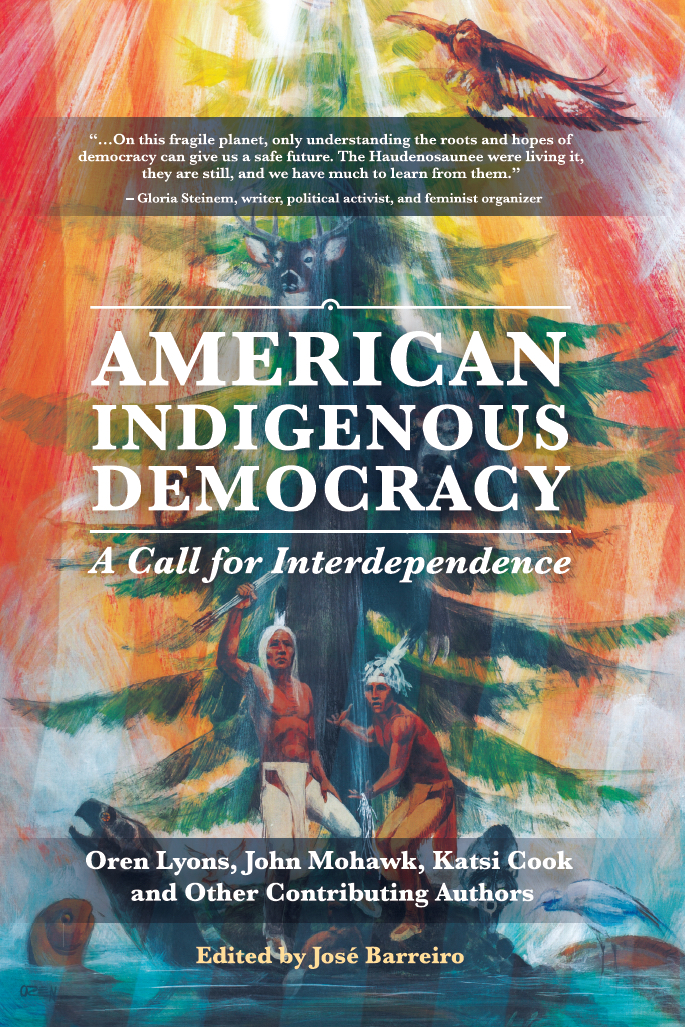
The afternoon event featured a conversation with two of the contributing authors to the new book, American Indigenous Democracy: A Call for Interdependence (Guaní Press), a landmark anthology exploring the Haudenosaunee Great Law of Peace. The book joined many other publications and events commemorating the 250th anniversary of the Declaration of Independence.
Released in July of this year, American Indigenous Democracy: A Call for Interdependence presents a comprehensive collection of essays by prominent Haudenosaunee leaders and scholars, including Oren Lyons, John Mohawk, Louise Herne and Katsi Cook. The volume examines the enduring legacy, political philosophy, and modern relevance of the Great Law of Peace—the oral constitution that unified the Iroquois (Haudenosaunee) Confederacy and remains the socio-political base for the longest continuous democracy on the planet.
During the conversation, Hatueyael José Barreiro, editor of the anthology, and Mohawk contributing author and Clan Mother Wakérakats:te Louise Herne (Mommabear) offered the audience a primer on the historical significance and contemporary applications of Indigenous governance frameworks, including the pivotal role of women.
The discussion explored how the principles of peace, equity, and civil authority laid out centuries ago continue to offer ideas for addressing modern societal and environmental challenges.
Audience members were surprised to learn that existing historical documents show evidence of the influence the Great Law of Peace had in the creation of the founding documents of the United States, and the personal relationship that several signers of the Declaration of Independence, including Benjamin Franklin and John Adams, had with leaders of the Haudenosaunee Confederacy.
American political feminist icon Gloria Steinem, in a blurb included in the opening pages of the book, wrote: “American Indigenous Democracy: A Call for Interdependence is a much-needed and well researched book that documents the truth that democracy was developed in North America, and is its gift to the world. On this fragile planet, only understanding the roots and hopes of democracy can give us a safe future. The Haudenosaunee were living it, they are still, and we have much to learn from them.”
The event concluded with a Q&A session and book signing.
For more information about American Indigenous Democracy: A Call for Interdependence, bulk sales, upcoming public programs, or to host a conversation with the authors, please visit guanipress.com. To dive deeper into the Great Law of Peace, visit americanindigenousdemoracy.com
Raquel Picayo
Guaní Press
raquel@guanipress.com
Legal Disclaimer:
EIN Presswire provides this news content “as is” without warranty of any kind. We do not accept any responsibility or liability
for the accuracy, content, images, videos, licenses, completeness, legality, or reliability of the information contained in this
article. If you have any complaints or copyright issues related to this article, kindly contact the author above.

Media gallery


