All County Collision Publishes Consumer Guide to Rear-End Collision Damage
EUSTIS, FL - September 24, 2026 - PRESSADVANTAGE - All County Collision has published consumer guidance explaining how
Press Release Disclaimer: This is a press release distributed through the XPR Media network. It has not been independently verified by our newsroom.

EUSTIS, FL – September 24, 2026 – PRESSADVANTAGE –
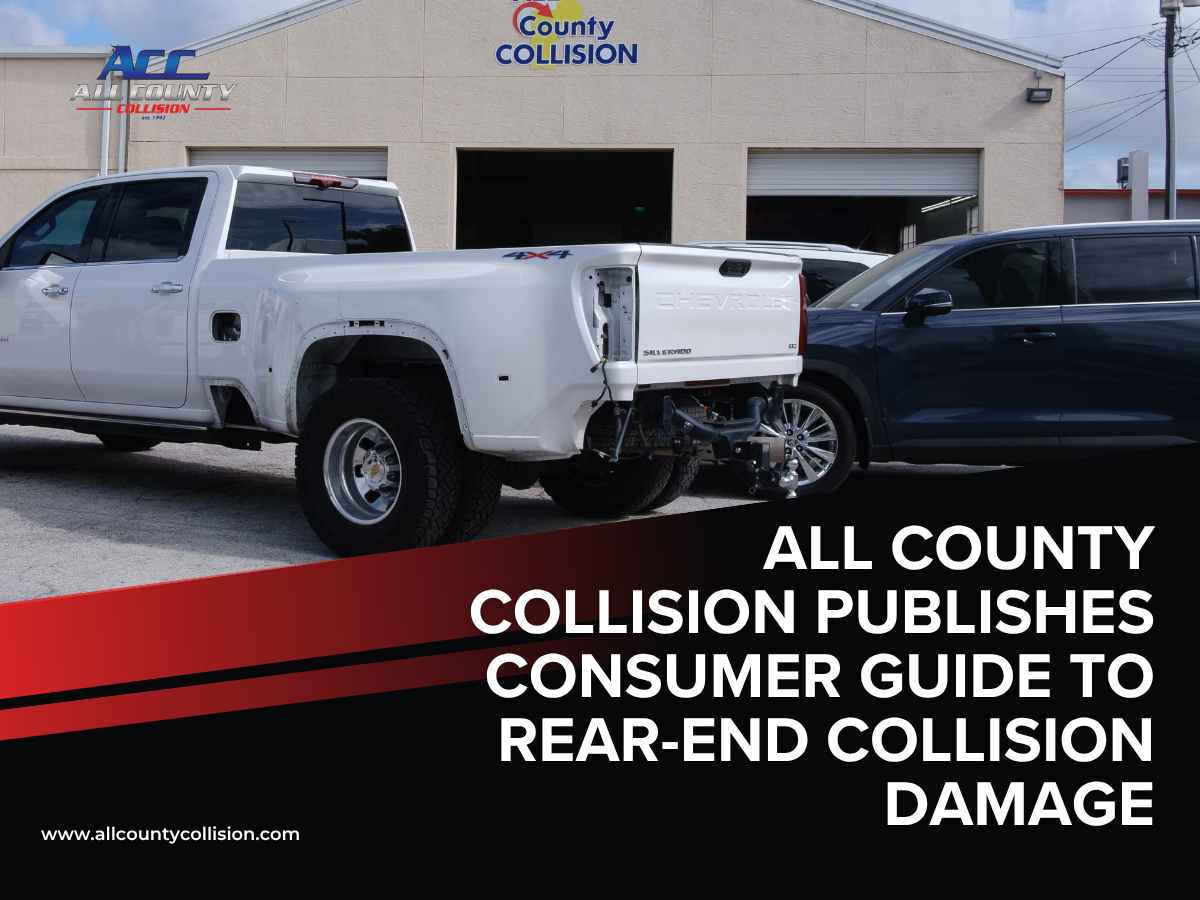
All County Collision has published consumer guidance explaining how a rear-end collision can affect more than the bumper surface visible immediately after an accident. The September publication focuses on four areas that can be involved in a rear impact: the bumper assembly, trunk or liftgate area, adjoining body components, and vehicle technology positioned within or near the damaged area.
The guidance expands on All County Collision’s collision repair information by helping consumers distinguish visible bumper damage from conditions that may require further evaluation. A cracked or scraped bumper cover can be the most noticeable sign of an impact, but the complete affected area can include components located behind or around it.
A rear bumper is typically an assembly rather than a single exterior part. Depending on the vehicle, the visible cover can be installed over reinforcement components, energy-absorbing materials, brackets, retainers, fasteners, wiring, and other parts. Collision forces can affect these components even when damage to the exterior cover appears relatively limited.
This distinction is the first focus of the September guide. A bumper cover that remains attached does not establish the condition of the components behind it. Technicians can evaluate the complete assembly and its attachment areas when determining the documented repair scope.
The trunk or liftgate provides a second area for evaluation. Rear collision forces can change the fit or operation of a trunk lid or liftgate even when the closure itself was not the primary point of impact.
Observable changes can include different spacing around the closure, increased effort when opening or closing it, altered latch operation, or contact with adjoining components. These conditions can provide information about how the rear body area changed during the collision.
Weather sealing can also be considered when a trunk or liftgate no longer sits in its intended position. Changes around the opening or seals can contribute to new wind noise or water intrusion. These symptoms do not identify a specific damaged component by themselves, but they can be documented as part of the post-collision evaluation.
Adjoining body components form the third part of the guide’s framework. Rear impacts can involve quarter panels, lamps, trunk or liftgate openings, mounting locations, and other areas connected to the visible point of contact.
The extent of this damage is not determined solely by impact speed or the appearance of the bumper. Vehicle construction, impact location, direction of force, and the components involved can all influence the resulting conditions.
All County Collision’s collision repair process provides additional context for why the repair plan can develop as technicians gain access to the collision area. When appropriate, removal of damaged exterior components can expose attachment points and adjoining areas that were not fully accessible during the initial exterior assessment.
This can help distinguish damage limited to replaceable exterior components from conditions involving additional parts of the rear assembly. It can also provide information needed to determine repair sequence before body work, component installation, and refinishing are completed.
The fourth area addressed in the September publication is vehicle technology. Modern rear bumpers and adjoining body areas can contain parking sensors, cameras, wiring, or other electronic equipment depending on the vehicle and its configuration.
A rear collision does not automatically mean that a particular electronic system has been damaged or that calibration is required. Technicians can identify the systems installed on the individual vehicle, determine whether relevant components or mounting areas were affected, and review applicable manufacturer procedures for the repairs being performed.
Rear lighting can also be part of the affected area. Tail lamps and other lighting components may sit near quarter panels, trunk openings, liftgates, or bumper areas. Evaluation can include the lamp itself along with mounting locations, electrical connections, and surrounding body components when the impact occurred nearby.
The new September guide is intended to distinguish four connected areas that consumers may initially view as a single bumper problem. The visible bumper, rear closure, adjoining body components, and installed vehicle technology can each require separate evaluation depending on the circumstances of the collision.
This framework also explains why two rear-end collisions with similar exterior appearance can produce different repair plans. One vehicle may have damage concentrated in the bumper assembly, while another can have additional conditions involving attachment points, closure fit, lamps, adjoining panels, or other components.
For vehicle owners, changes in operation after an accident can provide useful information during the assessment. A trunk or liftgate that operates differently, changed panel spacing, damaged lighting, warning indicators, loose bumper components, or new water intrusion can be documented along with the visible collision damage.
The purpose of the September publication is not to suggest that every rear impact produces concealed or extensive damage. Instead, it provides a component-based framework for understanding why the complete rear collision area may need to be evaluated before the final repair scope is established.
Information about the facility is available through All County Collision’s Eustis location.
All County Collision provides collision repair and auto body repair services for vehicle owners in Eustis and surrounding Central Florida communities. The facility is located at 25 S Bay St, Eustis, FL 32726, United States.
###
For more information about All County Collision, contact the company here:
All County Collision
Ryan DeMarco
3523574599
ryan@allcountycollision.com
25 S Bay Street, Eustis, FL 32726