Soy Protein Concentrates Market to Reach USD 3.13 Billion by 2034, Driven by Rising Plant Protein Demand at 3.3% CAGR
Soy Protein Concentrates Market is set to grow from USD 2.56 billion in 2025 to USD 3.13 billion by 2034, advancing at
Press Release Disclaimer: This is a press release distributed through the XPR Media network. It has not been independently verified by our newsroom.
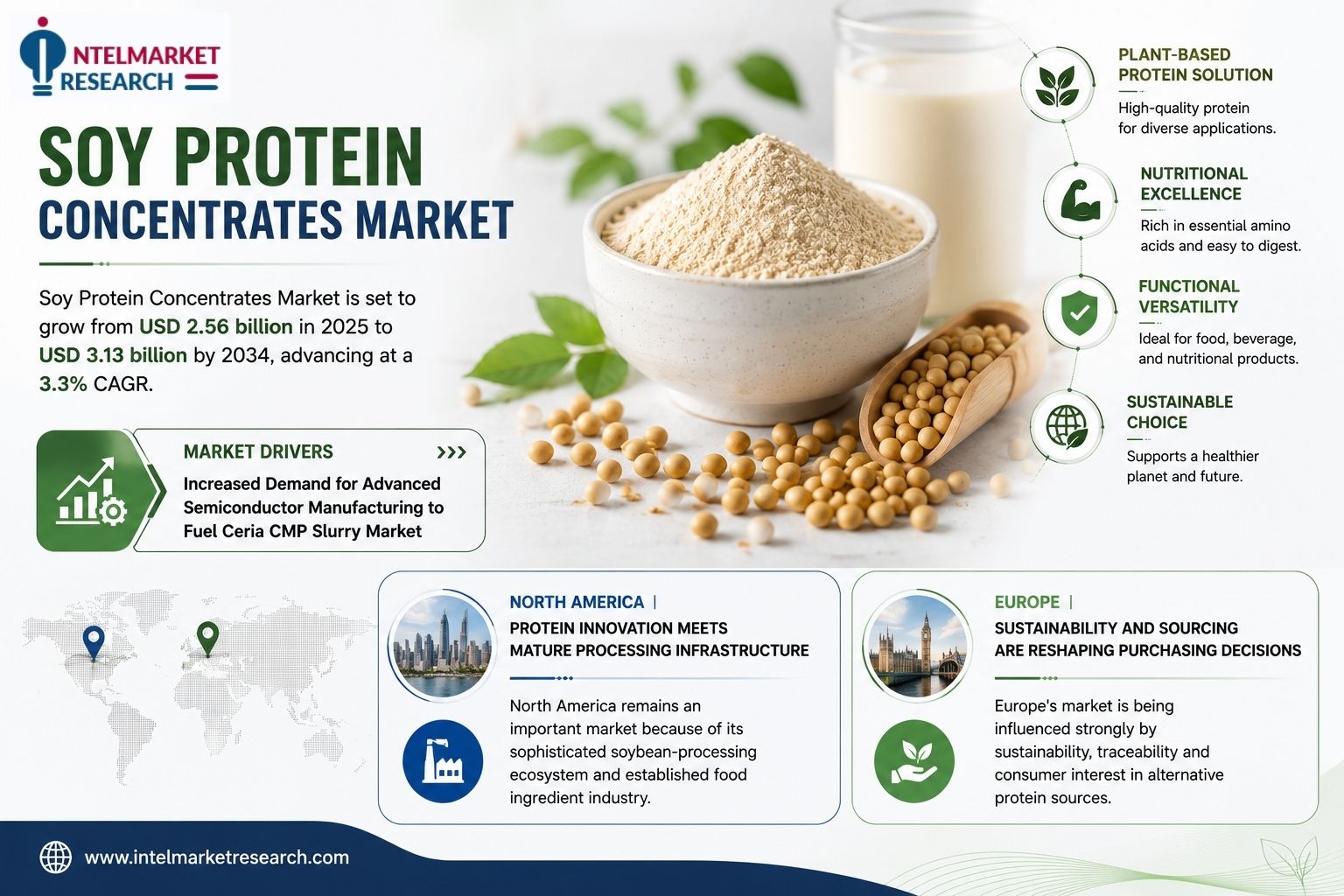

Soy Protein Concentrates Market is set to grow from USD 2.56 billion in 2025 to USD 3.13 billion by 2034, advancing at a 3.3% CAGR.
PUNE, MAHARASHTRA, INDIA, August 26, 2026 /EINPresswire.com/ — Soy Protein Concentrates Market is entering a new phase in which manufacturers are evaluating soy protein not simply as an economical protein source, but as a multifunctional ingredient capable of solving texture, nutrition, formulation and production challenges.
Soy protein concentrate generally contains at least 65% protein and is produced by removing a substantial portion of the soluble carbohydrates from defatted soybean material. Its combination of protein density, water-binding capability, emulsification, texturization and relatively broad application flexibility has positioned it between basic soy flour and higher-purity soy protein isolates.
The market is now being shaped by a more demanding buyer: food manufacturers want ingredients that can deliver nutritional value while also improving mouthfeel, processing performance, yield and label positioning.
𝐓𝐡𝐞 𝐈𝐧𝐠𝐫𝐞𝐝𝐢𝐞𝐧𝐭 𝐈𝐬 𝐁𝐞𝐜𝐨𝐦𝐢𝐧𝐠 𝐚 𝐅𝐨𝐫𝐦𝐮𝐥𝐚𝐭𝐢𝐨𝐧 𝐓𝐨𝐨𝐥
• One of the most important developments in 2026 is the move toward application-specific soy protein concentrates.
• Ingredient suppliers are increasingly developing concentrates with differentiated particle sizes, viscosity profiles, texture characteristics and processing behavior.
• This allows manufacturers to select a protein ingredient according to the finished product rather than treating soy protein concentrate as a standardized commodity.
𝐅𝐨𝐫 𝐢𝐧𝐬𝐭𝐚𝐧𝐜𝐞, 𝐢𝐧 𝐌𝐚𝐲 𝟐𝟎𝟐𝟔,
⁍ Agribusiness ADM has added soy and pea-based solutions for food makers in North America and Europe by adding eight additional plant protein products to its ingredient line.
⁍ The new array includes pea flour, soy protein isolates, and soy protein concentrates, which can be used in plant-based meat substitutes, dairy substitutes, drinks, baked products, and snacks.
⁍ In order to cater to regional clients in Europe, the Middle East, and Africa, two of the products textured and concentrate soy proteins sold under the Arcon brand are specially supplied from European supply chains.
• This shift demonstrates how competition is moving toward functionality and formulation support.
𝟐𝟎𝟐𝟔 𝐒𝐮𝐩𝐩𝐥𝐲 𝐃𝐲𝐧𝐚𝐦𝐢𝐜𝐬 𝐀𝐫𝐞 𝐂𝐫𝐞𝐚𝐭𝐢𝐧𝐠 𝐚 𝐒𝐭𝐫𝐨𝐧𝐠𝐞𝐫 𝐑𝐚𝐰-𝐌𝐚𝐭𝐞𝐫𝐢𝐚𝐥 𝐅𝐨𝐮𝐧𝐝𝐚𝐭𝐢𝐨𝐧
Soybean availability remains a crucial variable for the concentrate industry. The latest USDA outlook forecasts 4.52 billion bushels of U.S. soybean production for marketing year 2026/27, supported by an estimated 85.8 million harvested acres. U.S. soybean crush is forecast at 2.78 billion bushels.
At the global level, soybean crush for 2026/27 is forecast at 384.8 million metric tons, approximately 11 million metric tons above the revised 2025/26 level. Strong demand for soybean meal and soybean oil remains a major force behind crushing activity.
For soy protein concentrate producers, this creates an important strategic connection between oilseed processing capacity, soybean meal availability and downstream protein ingredient manufacturing.
💠𝐏𝐥𝐞𝐚𝐬𝐞 𝐓𝐚𝐤𝐞 𝐚 𝐋𝐨𝐨𝐤 𝐚𝐭 𝐎𝐮𝐫 𝐔𝐩𝐝𝐚𝐭𝐞𝐝 𝐒𝐚𝐦𝐩𝐥𝐞 𝐑𝐞𝐩𝐨𝐫𝐭 𝐇𝐞𝐫𝐞: https://www.intelmarketresearch.com/download-free-sample/29191/soy-protein-concentrates-market
𝐒𝐞𝐠𝐦𝐞𝐧𝐭𝐚𝐭𝐢𝐨𝐧 𝐀𝐧𝐚𝐥𝐲𝐬𝐢𝐬
𝐓𝐲𝐩𝐞 | 𝐏𝐫𝐨𝐜𝐞𝐬𝐬𝐢𝐧𝐠 𝐌𝐞𝐭𝐡𝐨𝐝 𝐈𝐬 𝐁𝐞𝐜𝐨𝐦𝐢𝐧𝐠 𝐚 𝐏𝐫𝐨𝐝𝐮𝐜𝐭 𝐃𝐢𝐟𝐟𝐞𝐫𝐞𝐧𝐭𝐢𝐚𝐭𝐨𝐫
• Aqueous Alcohol Washing Process Product (Premium Formulation Preference)
• Acid Washing Process Product
• Other
𝗪𝗵𝘆 𝗶𝘁 𝘀𝘁𝗮𝗻𝗱𝘀 𝗼𝘂𝘁: Aqueous alcohol washing products are gaining attention where manufacturers need cleaner flavor profiles, good dispersibility and reliable functional performance. The process can remove soluble carbohydrates and undesirable flavor compounds, making the resulting concentrate useful in meat alternatives, processed foods and other formulations where sensory quality matters. Its compatibility with premium and clean-label positioning further strengthens its appeal.
𝗠𝗮𝗿𝗸𝗲𝘁 𝘀𝗶𝗴𝗻𝗮𝗹: The real opportunity is moving toward application-specific concentrates rather than a one-grade-fits-all protein ingredient model.
𝐀𝐩𝐩𝐥𝐢𝐜𝐚𝐭𝐢𝐨𝐧 | 𝐅𝐞𝐞𝐝 𝐈𝐬 𝐓𝐮𝐫𝐧𝐢𝐧𝐠 𝐒𝐨𝐲 𝐏𝐫𝐨𝐭𝐞𝐢𝐧 𝐢𝐧𝐭𝐨 𝐚𝐧 𝐄𝐟𝐟𝐢𝐜𝐢𝐞𝐧𝐜𝐲 𝐈𝐧𝐠𝐫𝐞𝐝𝐢𝐞𝐧𝐭
• Food Industry
• Feed Industry (High-Volume Consumption Base)
• Others
𝗪𝗵𝘆 𝗶𝘁 𝘀𝘁𝗮𝗻𝗱𝘀 𝗼𝘂𝘁: Feed applications benefit from soy protein concentrate’s protein density and digestibility, particularly in poultry, swine and aquaculture formulations. As producers seek better feed conversion and consistent nutritional performance, concentrates can serve as a useful alternative or complement to conventional protein inputs.
𝗠𝗮𝗿𝗸𝗲𝘁 𝘀𝗶𝗴𝗻𝗮𝗹: Aquaculture is becoming particularly interesting because formulators are looking for protein ingredients that can support growth while reducing dependence on fishmeal and other resource-intensive inputs.
𝐄𝐧𝐝 𝐔𝐬𝐞𝐫 | 𝐀𝐧𝐢𝐦𝐚𝐥 𝐍𝐮𝐭𝐫𝐢𝐭𝐢𝐨𝐧 𝐏𝐫𝐨𝐯𝐢𝐝𝐞𝐫𝐬 𝐇𝐨𝐥𝐝 𝐭𝐡𝐞 𝐕𝐨𝐥𝐮𝐦𝐞 𝐀𝐝𝐯𝐚𝐧𝐭𝐚𝐠𝐞
• Food & Beverage Manufacturers
• Animal Nutrition Providers (Largest Consumption Base)
• Nutraceutical & Supplement Producers
𝗪𝗵𝘆 𝗶𝘁 𝘀𝘁𝗮𝗻𝗱𝘀 𝗼𝘂𝘁: Animal nutrition companies operate at substantial formulation volumes and require predictable protein quality across large production runs. Soy protein concentrates can be incorporated into specialized poultry, swine and aquafeed formulations while helping formulators manage nutritional consistency.
𝗠𝗮𝗿𝗸𝗲𝘁 𝘀𝗶𝗴𝗻𝗮𝗹: Increasing attention to feed efficiency and resource utilization is making protein functionality an operational consideration, not simply a nutritional specification.
𝐅𝐮𝐧𝐜𝐭𝐢𝐨𝐧𝐚𝐥𝐢𝐭𝐲 | 𝐓𝐞𝐱𝐭𝐮𝐫𝐢𝐳𝐚𝐭𝐢𝐨𝐧 𝐈𝐬 𝐄𝐱𝐩𝐚𝐧𝐝𝐢𝐧𝐠 𝐭𝐡𝐞 𝐈𝐧𝐠𝐫𝐞𝐝𝐢𝐞𝐧𝐭’𝐬 𝐑𝐨𝐥𝐞
• Texturizer (Key Functional Application)
• Binder
• Fat/Water Retainer
𝗪𝗵𝘆 𝗶𝘁 𝘀𝘁𝗮𝗻𝗱𝘀 𝗼𝘂𝘁: Texturization has become particularly important as food manufacturers develop plant-based burgers, sausages, nuggets and meat extenders. Soy protein concentrate can contribute to structure, cohesion and bite while helping manufacturers formulate products with familiar meat-like characteristics.
𝗠𝗮𝗿𝗸𝗲𝘁 𝘀𝗶𝗴𝗻𝗮𝗹: The opportunity extends beyond meat alternatives into bakery, snacks, extruded foods and processed products where protein needs to perform a structural role.
𝐒𝐨𝐮𝐫𝐜𝐢𝐧𝐠 | 𝐂𝐨𝐧𝐯𝐞𝐧𝐭𝐢𝐨𝐧𝐚𝐥 𝐒𝐨𝐲 𝐑𝐞𝐦𝐚𝐢𝐧𝐬 𝐭𝐡𝐞 𝐕𝐨𝐥𝐮𝐦𝐞 𝐅𝐨𝐮𝐧𝐝𝐚𝐭𝐢𝐨𝐧
• Conventional (Mainstream Supply Base)
• Non-GMO
• Organic
𝗪𝗵𝘆 𝗶𝘁 𝘀𝘁𝗮𝗻𝗱𝘀 𝗼𝘂𝘁: Conventional sourcing continues to provide the scale, availability and cost structure required for high-volume food and feed manufacturing. Established soybean-processing infrastructure also makes conventional concentrate easier to source consistently across major producing regions.
𝐌𝐚𝐫𝐤𝐞𝐭 𝐬𝐢𝐠𝐧𝐚𝐥: Non-GMO and organic grades are gaining differentiation at the premium end, but conventional supply remains critical for manufacturers prioritizing cost efficiency and dependable volumes.
𝐓𝐞𝐱𝐭𝐮𝐫𝐞𝐝 𝐏𝐫𝐨𝐭𝐞𝐢𝐧 𝐈𝐬 𝐑𝐞𝐰𝐫𝐢𝐭𝐢𝐧𝐠 𝐭𝐡𝐞 𝐂𝐨𝐦𝐩𝐞𝐭𝐢𝐭𝐢𝐯𝐞 𝐏𝐥𝐚𝐲𝐛𝐨𝐨𝐤
➢ Textured soy protein concentrate is emerging as one of the most commercially interesting formats because it directly addresses the challenge of creating meat-like structure in plant-based foods.
➢ The opportunity is expanding beyond traditional meat substitutes. Textured soy ingredients can support applications ranging from hybrid meat products and fillings to prepared meals, snacks and protein-rich convenience foods.
➢ Manufacturers are increasingly searching for proteins that can provide bite, moisture retention, and structural integrity and cooking stability while maintaining acceptable flavor characteristics.
➢ This is particularly relevant as food companies experiment with hybrid formulations that combine plant and animal proteins instead of relying exclusively on fully plant-based products.
🔹𝐆𝐞𝐭 𝐅𝐮𝐥𝐥 𝐀𝐜𝐜𝐞𝐬𝐬 𝐭𝐨 𝐭𝐡𝐞 𝐃𝐞𝐭𝐚𝐢𝐥𝐞𝐝 𝐑𝐞𝐩𝐨𝐫𝐭: https://www.intelmarketresearch.com/soy-protein-concentrates-market-29191
𝐇𝐢𝐠𝐡-𝐏𝐫𝐨𝐭𝐞𝐢𝐧 𝐄𝐚𝐭𝐢𝐧𝐠 𝐈𝐬 𝐄𝐱𝐩𝐚𝐧𝐝𝐢𝐧𝐠 𝐭𝐡𝐞 𝐀𝐝𝐝𝐫𝐞𝐬𝐬𝐚𝐛𝐥𝐞 𝐀𝐩𝐩𝐥𝐢𝐜𝐚𝐭𝐢𝐨𝐧 𝐁𝐚𝐬𝐞
Protein fortification is becoming a mainstream product-development strategy rather than a niche sports-nutrition concept.
⁍ ADM reported in 2026 that 66% of consumers globally are looking to increase their protein intake, while 86% say it is healthier to obtain protein from a wider variety of sources.
That shift is creating opportunities for soy protein concentrates in protein beverages, nutrition powders, snack products, bakery formulations, meal replacements and fortified foods.
The commercial advantage lies in multifunctionality: manufacturers can use soy protein to increase protein density while simultaneously modifying texture and processing characteristics.
𝐅𝐞𝐞𝐝 𝐚𝐧𝐝 𝐀𝐪𝐮𝐚𝐜𝐮𝐥𝐭𝐮𝐫𝐞 𝐊𝐞𝐞𝐩 𝐭𝐡𝐞 𝐕𝐨𝐥𝐮𝐦𝐞 𝐄𝐧𝐠𝐢𝐧𝐞 𝐑𝐮𝐧𝐧𝐢𝐧𝐠
While food applications attract greater consumer visibility, animal nutrition remains an important volume driver for soy protein concentrate.
The ingredient’s protein density and functionality make it relevant to poultry, swine and aquaculture formulations, particularly where producers are seeking efficient protein sources.
This creates an unusual market structure in which premium food applications can support product differentiation while feed applications provide large-scale baseline demand.
𝐂𝐥𝐞𝐚𝐧 𝐋𝐚𝐛𝐞𝐥𝐬 𝐀𝐫𝐞 𝐂𝐡𝐚𝐧𝐠𝐢𝐧𝐠 𝐖𝐡𝐚𝐭 𝐁𝐮𝐲𝐞𝐫𝐬 𝐀𝐬𝐤 𝐒𝐮𝐩𝐩𝐥𝐢𝐞𝐫𝐬
The next competitive battlefield is not limited to protein percentage.
o Food manufacturers are increasingly evaluating non-GMO status, organic certification, traceability, sourcing transparency and processing characteristics alongside conventional technical specifications.
o At the same time, soy remains a regulated major food allergen in the United States. FDA guidance requires packaged foods containing soy to appropriately identify the allergen, including through a “Contains” statement or ingredient-list declaration where applicable.
o Consequently, ingredient suppliers that combine functional performance with documentation, traceability and regulatory support can gain an advantage with multinational food companies.
𝐓𝐡𝐞 𝐂𝐨𝐦𝐩𝐞𝐭𝐢𝐭𝐢𝐯𝐞 𝐁𝐚𝐭𝐭𝐥𝐞𝐠𝐫𝐨𝐮𝐧𝐝 𝐈𝐬 𝐌𝐨𝐯𝐢𝐧𝐠 𝐓𝐨𝐰𝐚𝐫𝐝 𝐅𝐮𝐧𝐜𝐭𝐢𝐨𝐧𝐚𝐥𝐢𝐭𝐲
The strongest differentiation is increasingly being created around solubility, flavor profile, protein concentration, texture performance, processing consistency and sourcing credentials.
For food manufacturers, a supplier that can provide a concentrate tailored for extrusion or meat alternatives can offer more value than a supplier competing solely on protein content. Feed manufacturers, meanwhile, place greater emphasis on digestibility, nutritional consistency and dependable supply.
𝐊𝐞𝐲 𝐂𝐨𝐦𝐩𝐚𝐧𝐢𝐞𝐬 𝐏𝐫𝐨𝐟𝐢𝐥𝐞𝐝;
◘ ADM
◘ IFF
◘ CJ Selecta
◘ Gushen Biological Technology Group
◘ Caramuru Alimentos
◘ Yuwang Group
◘ Shandong Wonderful Industrial Group
◘ Fujian Changde Protein Science and Technology
◘ Wilmar
◘ Nordic Soya
◘ IMCOPA
◘ Solbar
◘ MECAGROUP
◘ Henan Shuguang
◘ Shandong Zhongyang Biotechnology
◘ Shandong Yuxin Bio-Tech
𝐖𝐡𝐚𝐭 𝐂𝐨𝐦𝐞𝐬 𝐍𝐞𝐱𝐭 𝐟𝐨𝐫 𝐒𝐨𝐲 𝐏𝐫𝐨𝐭𝐞𝐢𝐧 𝐂𝐨𝐧𝐜𝐞𝐧𝐭𝐫𝐚𝐭𝐞𝐬?
The upcoming competitive landscape will increasingly be determined by what a soy protein concentrate can do inside a finished product rather than how much protein it contains.
The strongest opportunities are expected to emerge around textured formulations, high-protein convenience foods, hybrid meat products, dairy alternatives, sports and clinical nutrition, aquaculture and customized ingredient systems.
At the same time, soybean processing economics, sustainability requirements and traceability expectations will continue influencing procurement decisions.
The market’s next chapter is therefore less about replacing animal protein and more about making protein formulation smarter, more efficient and commercially scalable.
🔹𝐆𝐫𝐚𝐛 𝐲𝐨𝐮𝐫 𝐒𝐚𝐦𝐩𝐥𝐞 𝐑𝐞𝐩𝐨𝐫𝐭: https://www.intelmarketresearch.com/download-free-sample/29191/soy-protein-concentrates-market
𝐑𝐞𝐠𝐢𝐨𝐧𝐚𝐥 𝐀𝐧𝐚𝐥𝐲𝐬𝐢𝐬:
𝗙𝗶𝘃𝗲 𝗥𝗲𝗴𝗶𝗼𝗻𝗮𝗹 𝗠𝗮𝗿𝗸𝗲𝘁𝘀, 𝗙𝗶𝘃𝗲 𝗗𝗶𝗳𝗳𝗲𝗿𝗲𝗻𝘁 𝗚𝗿𝗼𝘄𝘁𝗵 𝗦𝘁𝗼𝗿𝗶𝗲𝘀
Soy protein concentrates do not have a uniform global demand pattern. Each major region is being shaped by a different combination of soybean availability, food manufacturing, livestock production, plant-based consumption and ingredient preferences.
➣ 𝐍𝐨𝐫𝐭𝐡 𝐀𝐦𝐞𝐫𝐢𝐜𝐚 | 𝐏𝐫𝐨𝐭𝐞𝐢𝐧 𝐈𝐧𝐧𝐨𝐯𝐚𝐭𝐢𝐨𝐧 𝐌𝐞𝐞𝐭𝐬 𝐌𝐚𝐭𝐮𝐫𝐞 𝐏𝐫𝐨𝐜𝐞𝐬𝐬𝐢𝐧𝐠 𝐈𝐧𝐟𝐫𝐚𝐬𝐭𝐫𝐮𝐜𝐭𝐮𝐫𝐞
North America remains an important market because of its sophisticated soybean-processing ecosystem and established food ingredient industry. The region also has a strong base of plant-based food manufacturers using soy-derived proteins in meat alternatives and formulated foods.
The United States Department of Agriculture continues to track substantial U.S. soybean production and processing activity, providing a strong domestic foundation for soy-based ingredients.
The regional opportunity is increasingly centered on higher-value functional ingredients, particularly concentrates designed for texture, clean-label formulations and specialized nutrition.
➣ 𝐄𝐮𝐫𝐨𝐩𝐞 | 𝐒𝐮𝐬𝐭𝐚𝐢𝐧𝐚𝐛𝐢𝐥𝐢𝐭𝐲 𝐚𝐧𝐝 𝐒𝐨𝐮𝐫𝐜𝐢𝐧𝐠 𝐀𝐫𝐞 𝐑𝐞𝐬𝐡𝐚𝐩𝐢𝐧𝐠 𝐏𝐮𝐫𝐜𝐡𝐚𝐬𝐢𝐧𝐠 𝐃𝐞𝐜𝐢𝐬𝐢𝐨𝐧𝐬
Europe’s market is being influenced strongly by sustainability, traceability and consumer interest in alternative protein sources. Food manufacturers are increasingly evaluating ingredients not just on functionality but also on origin, environmental credentials and processing characteristics.
This makes non-GMO, traceable and responsibly sourced soy protein concentrates particularly relevant for premium food applications.
➣ 𝐀𝐬𝐢𝐚 𝐏𝐚𝐜𝐢𝐟𝐢𝐜 | 𝐏𝐫𝐨𝐜𝐞𝐬𝐬𝐢𝐧𝐠 𝐒𝐜𝐚𝐥𝐞 𝐂𝐫𝐞𝐚𝐭𝐞𝐬 𝐚 𝐒𝐭𝐫𝐮𝐜𝐭𝐮𝐫𝐚𝐥 𝐀𝐝𝐯𝐚𝐧𝐭𝐚𝐠𝐞
Asia Pacific represents a major center of soybean processing and protein ingredient manufacturing. China has a particularly significant role through its extensive soybean processing industry and large food and animal feed sectors.
The region’s demand is supported by poultry, aquaculture and livestock production alongside expanding processed-food manufacturing. This creates a broad application base ranging from feed formulations to textured and protein-enriched foods.
India Is Moving From Demand Market to Processing Opportunity;
India is also becoming an important development point for higher-value soy protein processing.
⁍ In July 2026, India’s Technology Development Board announced financial support for Sonic Biochem Extractions in Indore for commercialization of functional and textured soya protein concentrates. The project is intended to establish manufacturing capacity using indigenous technology for functional and textured soy protein concentrate production.
The development is significant because it reflects a broader transition in India’s food-processing ecosystem: rather than relying primarily on conventional commodity ingredients, domestic manufacturers are targeting specialized protein formats for value-added applications.
➣ 𝐋𝐚𝐭𝐢𝐧 𝐀𝐦𝐞𝐫𝐢𝐜𝐚 | 𝐑𝐚𝐰-𝐌𝐚𝐭𝐞𝐫𝐢𝐚𝐥 𝐒𝐭𝐫𝐞𝐧𝐠𝐭𝐡 𝐒𝐮𝐩𝐩𝐨𝐫𝐭𝐬 𝐃𝐨𝐰𝐧𝐬𝐭𝐫𝐞𝐚𝐦 𝐆𝐫𝐨𝐰𝐭𝐡
Latin America benefits from its position within the global soybean supply chain. Brazil and Argentina are particularly important agricultural and processing markets, creating opportunities to move soybeans further downstream into higher-value protein ingredients.
Brazil’s position as one of the world’s largest soybean producers gives local processors an important raw-material advantage. The region’s opportunity is increasingly tied to value-added soybean processing rather than simply exporting agricultural commodities.
➣ 𝐌𝐢𝐝𝐝𝐥𝐞 𝐄𝐚𝐬𝐭 & 𝐀𝐟𝐫𝐢𝐜𝐚 | 𝐏𝐫𝐨𝐭𝐞𝐢𝐧 𝐒𝐞𝐜𝐮𝐫𝐢𝐭𝐲 𝐂𝐫𝐞𝐚𝐭𝐞𝐬 𝐚 𝐃𝐞𝐯𝐞𝐥𝐨𝐩𝐢𝐧𝐠 𝐎𝐩𝐩𝐨𝐫𝐭𝐮𝐧𝐢𝐭𝐲
The Middle East & Africa market is developing from a different starting point. Growing populations, food-import requirements and expanding livestock and poultry production are increasing interest in reliable plant-based protein ingredients.
Soy protein concentrates can support feed manufacturers looking to diversify protein inputs while food processors can use them in affordable protein-enriched products.
𝐎𝐮𝐫 𝐏𝐞𝐫𝐬𝐩𝐞𝐜𝐭𝐢𝐯𝐞 𝐨𝐧 𝐭𝐡𝐞 𝐎𝐩𝐩𝐨𝐫𝐭𝐮𝐧𝐢𝐭𝐲
➣ For companies evaluating Soy Protein Concentrates Market, headline demand alone does not reveal where the strongest opportunities are forming.
➣ Our research approach connects raw-material availability, processing developments, product innovation, application adoption, regional manufacturing activity and competitive positioning to provide a more practical view of where the industry is heading.
➣ The report is designed to help ingredient manufacturers, food and beverage companies, nutrition brands, feed producers, investors and strategic decision-makers identify emerging application pockets, assess regional opportunities, monitor product-development activity and understand the factors likely to influence procurement and investment decisions.
➣ Rather than presenting the market as a single protein category, the scope examines the industry through the lens of functionality, formulation economics, application expansion and strategic supply positioning helping stakeholders convert changing protein trends into actionable business opportunities.
🔹𝐘𝐨𝐮 𝐜𝐚𝐧 𝐟𝐫𝐞𝐞𝐥𝐲 𝐛𝐫𝐨𝐰𝐬𝐞 𝐨𝐮𝐫 𝐦𝐨𝐬𝐭 𝐫𝐞𝐜𝐞𝐧𝐭 𝐮𝐩𝐝𝐚𝐭𝐞𝐝 𝐫𝐞𝐩𝐨𝐫𝐭 𝐭𝐨 𝐥𝐞𝐚𝐫𝐧 𝐦𝐨𝐫𝐞 𝐚𝐛𝐨𝐮𝐭 𝐢𝐭 𝐛𝐞𝐟𝐨𝐫𝐞 𝐬𝐜𝐫𝐨𝐥𝐥𝐢𝐧𝐠 𝐟𝐮𝐫𝐭𝐡𝐞𝐫: https://www.intelmarketresearch.com/soy-protein-concentrates-market-29191
𝐄𝐱𝐩𝐥𝐨𝐫𝐞 𝐨𝐮𝐫 𝐑𝐞𝐥𝐞𝐯𝐚𝐧𝐭 𝐑𝐞𝐩𝐨𝐫𝐭𝐬:
🔶𝐒𝐨𝐲 𝐏𝐫𝐨𝐭𝐞𝐢𝐧 𝐇𝐚𝐦𝐛𝐮𝐫𝐠𝐞𝐫 𝐌𝐞𝐚𝐭 𝐌𝐚𝐫𝐤𝐞𝐭: https://www.intelmarketresearch.com/soy-protein-hamburger-meat-market-market-29034
🔶𝐏𝐫𝐨𝐭𝐞𝐢𝐧 𝐈𝐧𝐠𝐫𝐞𝐝𝐢𝐞𝐧𝐭𝐬 𝐌𝐚𝐫𝐤𝐞𝐭: https://www.intelmarketresearch.com/protein-ingredients-market-market-29184
🔶𝐍𝐨𝐧- 𝐆𝐌𝐎 𝐒𝐨𝐲𝐛𝐞𝐚𝐧𝐬 𝐌𝐚𝐫𝐤𝐞𝐭: https://www.intelmarketresearch.com/global-non-gmo-soybeans-market-633
🔶𝐅𝐮𝐥𝐥-𝐒𝐭𝐚𝐜𝐤 𝐏𝐫𝐨𝐭𝐞𝐢𝐧 𝐑𝐞𝐬𝐞𝐚𝐫𝐜𝐡 𝐚𝐧𝐝 𝐃𝐞𝐯𝐞𝐥𝐨𝐩𝐦𝐞𝐧𝐭 𝐏𝐥𝐚𝐭𝐟𝐨𝐫𝐦 𝐌𝐚𝐫𝐤𝐞𝐭: https://www.intelmarketresearch.com/full-stack-protein-development-platform-market-60692
🔶𝐒𝐨𝐲 𝐏𝐫𝐨𝐭𝐞𝐢𝐧 𝐈𝐬𝐨𝐥𝐚𝐭𝐞 𝐏𝐥𝐚𝐬𝐭𝐢𝐜𝐢𝐳𝐞𝐝 𝐆𝐥𝐲𝐜𝐞𝐫𝐨𝐥 𝐁𝐢𝐨𝐩𝐥𝐚𝐬𝐭𝐢𝐜 𝐒𝐡𝐞𝐞𝐭 𝐌𝐚𝐫𝐤𝐞𝐭: https://www.24chemicalresearch.com/reports/309865/soy-protein-isolate-plasticized-glycerol-bioplastic-sheet-forecast-market
𝐀𝐛𝐨𝐮𝐭 𝐈𝐧𝐭𝐞𝐥 𝐌𝐚𝐫𝐤𝐞𝐭 𝐑𝐞𝐬𝐞𝐚𝐫𝐜𝐡
Intel Market Research is a leading provider of strategic intelligence, offering actionable insights in robotics, automation, and advanced manufacturing technologies. Our research capabilities include:
• Real-time competitive benchmarking
• Global technology innovation monitoring
• Country-specific regulatory and industry analysis
• Over 500+ technology and manufacturing reports annually
Trusted by Fortune 500 companies, our insights empower decision-makers to drive innovation with confidence.
🌐 𝐖𝐞𝐛𝐬𝐢𝐭𝐞: https://www.intelmarketresearch.com
🔗 𝐋𝐢𝐧𝐤𝐞𝐝𝐈𝐧: https://www.linkedin.com/company/intel-market-research
Rohan
IntelMarketResearch
+91 91691 64321
email us here
Visit us on social media:
LinkedIn
Facebook
YouTube
X
Legal Disclaimer:
EIN Presswire provides this news content “as is” without warranty of any kind. We do not accept any responsibility or liability
for the accuracy, content, images, videos, licenses, completeness, legality, or reliability of the information contained in this
article. If you have any complaints or copyright issues related to this article, kindly contact the author above.

Media gallery