
2026 FoodMinds Study: Food Processing, Ingredients and Affordability Influence Consumer Choices
54% of consumers report starting or increasing food and beverage purchases based on perceptions of processing,
Press Release Disclaimer: This is a press release distributed through the XPR Media network. It has not been independently verified by our newsroom.


Food processing, ingredients and affordability are shaping how Americans make food purchasing decisions, according to FoodMinds’ 2026 Conscious Consumption Index™ (CCI), a national survey of 1,000 U.S. adults responsible for household grocery shopping.
This press release features multimedia. View the full release here: https://www.businesswire.com/news/home/20261026104440/en/
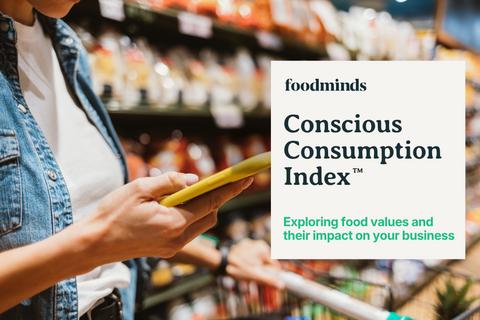
FoodMinds’ 2026 Conscious Consumption Index™ explores how food processing, ingredients and affordability influence U.S. consumer purchasing decisions.
54% say they started buying or bought more of a food or beverage in the past year because it seemed less processed, had fewer additives or contained ingredients they preferred.
46% report stopping or reducing purchases because a product seemed more processed, had additives or contained ingredients they preferred to avoid. Meanwhile, 58% agree that affordable foods are often the most processed, highlighting a perceived tension between ingredient and processing preferences and affordability.
“Americans are using ingredients and perceptions of processing to help decide what belongs in their shopping carts,” said Lauren Hoffman, MBA, RD, Senior Vice President at FoodMinds. “For food companies, understanding those perceptions is essential to communicating nutrition science in ways that address consumers’ questions and concerns.”
How food affordability influences consumer purchasing decisions
Six in 10 consumers (61%) agree that healthy, sustainable foods are too expensive. Nearly half (49%) strongly agree that food companies should do more to make healthier foods affordable.
Affordability and access also rank prominently among the actions consumers want companies to take to build trust. 30% say improving access to healthier foods in lower-income communities is a priority, and 28% say lowering the price of healthier foods will build trust.
Consumers want clear ingredient lists and transparent food labeling
When asked what would make brand messages about healthier, more affordable or less processed foods more believable, consumers most frequently select a clear ingredient list on the package (33%), followed by Nutrition Facts information showing lower added sugar, sodium or saturated fat (25%).
In message testing, statements about how foods are made and recognizable ingredients with explanations of their purpose rank among those most frequently selected as likely to increase trust. Statements about affordability, convenience and clearer information for parents rank among those most frequently selected as likely to encourage purchase.
“Consumers want clearer information about their food, and they want healthier choices to be affordable,” said Andrea Carrothers, MS, RD, Senior Vice President and Group Lead at FoodMinds. “Companies can build credibility by explaining what is in their products and why and supporting nutrition claims with understandable evidence. Addressing affordability alongside those efforts is essential to responding to what consumers say they need.”
Consumers increasingly use AI for food and nutrition information, while trust remains limited
44% of consumers report using AI tools or AI-generated search results for food, nutrition or grocery information. Use varies by generation, with 60% of Millennials and 55% of Gen Z reporting use, compared with 21% of Baby Boomers.
Across all respondents, 31% say they somewhat or completely trust AI tools to provide accurate food, nutrition, ingredient and food processing information.
As consumers turn to generative AI for nutrition guidance, food and beverage companies have an opportunity to improve how their brands appear in AI-generated answers, but also whether the information consumers encounter is accurate, credible and grounded in nutrition science.
GLP-1 users seek more nutrition information but face conflicting guidance
Current GLP-1 users are more likely than respondents reporting no GLP-1 use in their household to search at least weekly for:
- Nutrition information: 69% vs. 50%
- Ingredients and additives: 63% vs. 41%
- Processed or ultra-processed foods: 58% vs. 37%
Among current GLP-1 users, 32% strongly agree they feel overwhelmed by conflicting information about which foods are healthy (compared with 20% of respondents reporting no household use of GLP-1), suggesting a need for clear guidance that addresses their specific nutrition questions.
Explore the 2026 Conscious Consumption Index
Download the 2026 CCI executive summary for an overview of key findings and consumer trends.
For in-depth analysis, purchase the full CCI report, which includes a one-hour strategy session with senior FoodMinds advisors.
About the Conscious Consumption Index
CCI is a signature research initiative designed to track how consumer values, expectations and behaviors related to food, sustainability and agriculture evolve over time. The 2026 CCI focuses on the U.S. market, examining consumer perspectives on food processing and ingredients, affordability, trust and emerging sources of food and nutrition information.
The online survey included 1,000 U.S. adults with primary or shared responsibility for household grocery shopping. Fieldwork took place August 5–17, 2026. Findings reflect self-reported attitudes, perceptions and behaviors.
About FoodMinds
FoodMinds is a leading global marketing and communications consultancy specializing in the intersection of nutrition science, food policy and public health. A division of Padilla, FoodMinds helps food, nutrition, health and agriculture organizations translate complexity into credible strategies that build trust and drive meaningful impact across the food system. Visit FoodMinds.com.
View source version on businesswire.com: https://www.businesswire.com/news/home/20261026104440/en/
Media gallery

