New Flat Lens Switches Between Normal and Edge-Enhanced Images
SHANNON, CLARE, IRELAND, October 13, 2026 /EINPresswire.com/ -- Researchers have developed an electrically controlled
Press Release Disclaimer: This is a press release distributed through the XPR Media network. It has not been independently verified by our newsroom.
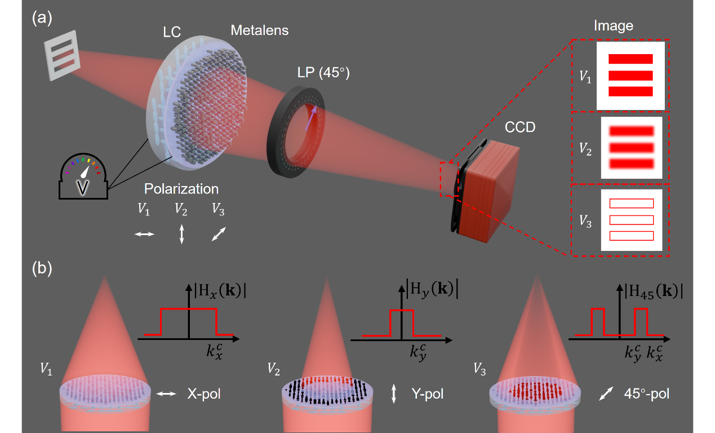

SHANNON, CLARE, IRELAND, October 13, 2026 /EINPresswire.com/ — Researchers have developed an electrically controlled flat lens that can switch between conventional imaging and edge-enhanced imaging, revealing structural details that may be difficult to distinguish using ordinary optical techniques. The technology could contribute to more compact microscopes and future optical imaging systems.
The international research team, led by scientists at Pohang University of Science and Technology (POSTECH) in South Korea, demonstrated a metalens that changes how it processes light in response to an electrical signal. Their findings, published in Opto-Electronic Science, introduce a way to control image contrast without relying on digital image processing.
Conventional microscopes often struggle to reveal the boundaries of transparent biological structures because these specimens produce relatively little contrast. Techniques designed to overcome this limitation can require additional optical components, increasing the complexity and size of imaging equipment.
The new device addresses this challenge by combining a polarization-sensitive metalens with a voltage-controlled liquid crystal cell. A metalens is an exceptionally thin optical element made from microscopic structures that manipulate light. In this design, electrical signals change the polarization of incoming light, allowing the system to select between three imaging states.
Two states produce conventional bright-field images with different optical resolutions. The third uses interference between two light channels to suppress background information while retaining details associated with structural boundaries. This produces edge-enhanced images directly through the optical system, without digital post-processing.
To demonstrate the technology, the researchers tested the device using a standard optical resolution target and several biological specimens, including earthworm tissue, onion epidermal cells and plant stem sections. The experiments showed clearer structural boundaries in edge-enhanced mode, including cell outlines that were less distinct in conventional images.
The fabricated metalens measures just 570 micrometres in diameter and was tested using light with a wavelength of 635 nanometres. Its electrically controlled operation also eliminates the need to mechanically rotate the metalens when changing imaging modes.
Although the current system remains a proof-of-concept and requires specific illumination conditions and additional optical components, the findings establish a promising approach to reconfigurable optical image processing.
By enabling different imaging functions within a compact optical architecture, the research could support future developments in miniaturized microscopy, label-free biological imaging and integrated optical technologies.
Keywords: polarization-multiplexed metalens, transfer-function engineering, interference, tunable
liquid crystals
# # # # # #
Opto-Electronic Science (OES) is a peer-reviewed, open access, interdisciplinary and international journal. OES has been indexed in ESCI, Scopus, DOAJ, and CAS databases, with a Scopus CiteScore Tracker of 30.7 for 2025 and a JCR Immediate Impact Factor of 26.
# # # # # #
More information: https://www.oejournal.org/oes
Editorial Board: https://www.oejournal.org/oes/editorialboard/list
All issues available in the online archive (https://www.oejournal.org/oes/archive)
Submission of OES may be made using ScholarOne (https://mc03.manuscriptcentral.com/oes)
CN 51-1800/O4
ISSN 2097-0382
Contact Us: oes@ioe.ac.cn
Twitter: @OptoElectronAdv (https://twitter.com/OptoElectronAdv?lang=en)
WeChat: OE_Journal
# # # # # #
Li XT, Seong J, Kim Y et al. Electrically switchable bright-field and interference-synthesized edge-enhanced imaging with a polarization-multiplexed metalens. Opto-Electron Sci 5, 260044 (2026). DOI: 10.29026/oes.2026.260044
Opto-Electronic Science Editorial Office
Opto-Electronic Science
oes@ioe.ac.cn
Legal Disclaimer:
EIN Presswire provides this news content “as is” without warranty of any kind. We do not accept any responsibility or liability
for the accuracy, content, images, videos, licenses, completeness, legality, or reliability of the information contained in this
article. If you have any complaints or copyright issues related to this article, kindly contact the author above.

Media gallery